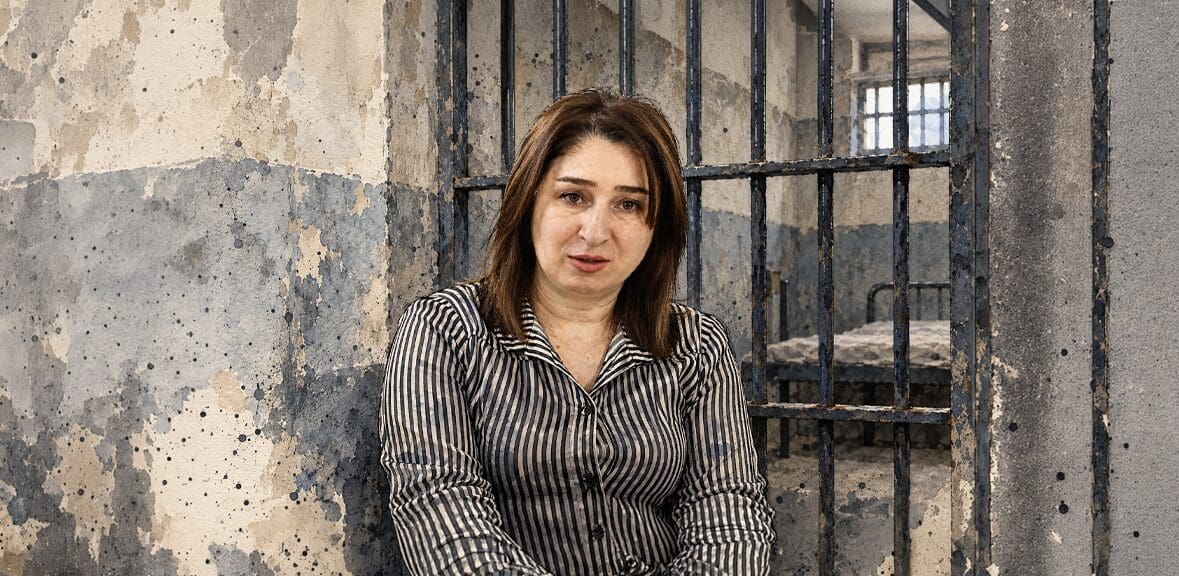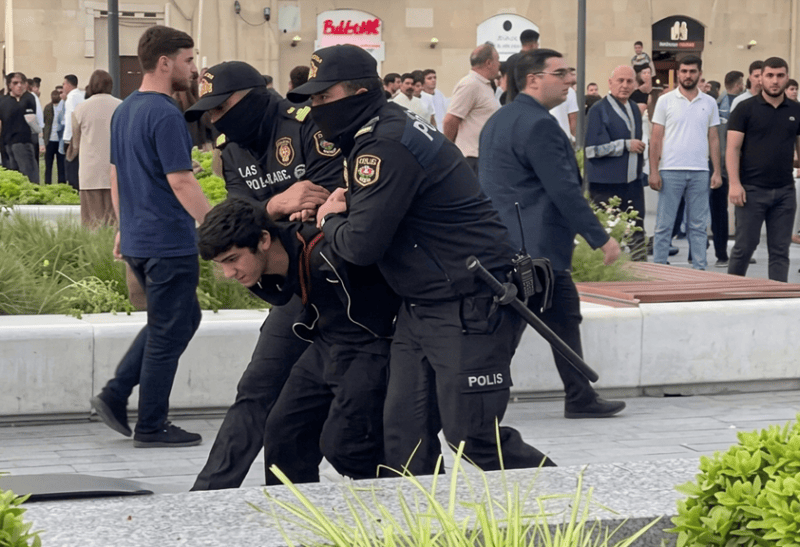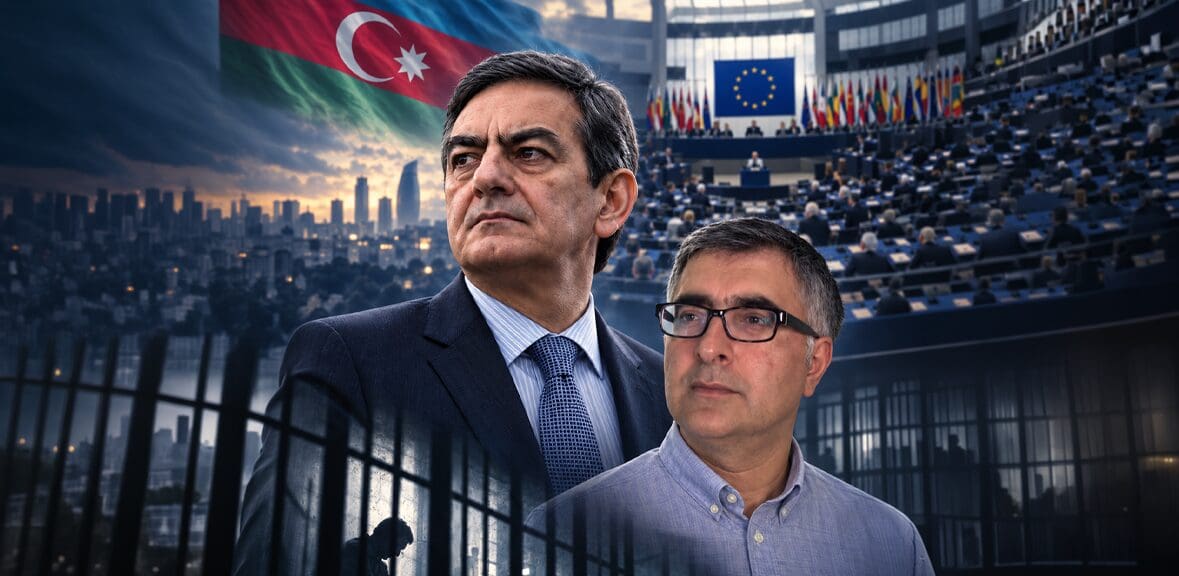
One notable aspect of recent criminal cases that have been described as politically motivated in Azerbaijan is the length of the prison sentences sought and imposed. During the past year, prison sentences ranging from 12 to 18 years have been requested by prosecutors or handed down by the courts in cases involving politicians, journalists, researchers, and civil society representatives.
On 23 June last year, Bahruz Samadov, a doctoral candidate at Charles University, received a 15-year prison sentence after being convicted of treason. A month earlier, on 20 May, Igbal Abilov, an ethnic researcher and editor-in-chief of the Talysh National Academy News website, was sentenced to 18 years in prison on charges of treason and other crimes.
On 11 March this year, Azer Gasimli, director of the Institute of Political Management, was sentenced to 12 years in prison on charges of extortion.
Meanwhile, long-term prison sentences have also been sought for the defendants in the Toplum TV case. The prosecutor has requested 16-year prison terms for Akif Gurbanov and Ruslan Izzatli, 15-year terms for Alasgar Mammadli and Ali Zeynalov, and sentences of 13 to 14 years for the remaining defendants.
In recent years, attention has increasingly been drawn to the imposition or pursuit of such lengthy prison sentences in cases considered politically motivated. Human rights defenders and observers believe that this may reflect not merely a series of individual cases, but a broader trend in sentencing policy.
So, has sentencing policy in politically motivated cases in Azerbaijan really changed? If so, how is this change manifested, and why is it happening now?
The longest prison sentences: Cases involving coup attempts and armed groups
Looking at recent history, we can see that in modern Azerbaijan, the harshest sentences in cases considered to be politically motivated have typically been imposed in cases that the authorities have portrayed as posing a direct threat to state security.
One such case was the criminal prosecutions brought against members of the OMON(Special Purpose Police Detachment) following the March 1995 events. In March of that year, an armed confrontation took place between the government and the OMON. According to official figures, dozens of people were killed and more than one hundred were injured during the clashes. OMON commander Rovshan Javadov died from injuries he sustained during the clashes, while many members of the unit were arrested. Elchin Amiraslanov, the former commander of the OMON’s Gazakh unit, as well as Safa Poladov and Arif Kazimov, were sentenced to life imprisonment.
In later years, one of the cases remembered for long prison sentences was the case of Said Dadashbeyli and the individuals tried together with him. In 2007, Said Dadasbeyli and 14 other individuals were found guilty of creating a criminal organization, treason, preparing to seize power by force, illegal possession of weapons, and other serious charges, and were sentenced to between 8 and 14 years in prison. The operation in that case was carried out by the then Ministry of National Security.
Both the “OMON case” and the “Said Dadashbeyli case,” which we present as examples, were portrayed by the authorities as cases related to state security, armed activity, and attempts to seize power by force. For this reason, the life sentences or prison terms exceeding 10 years handed down in those cases can be regarded as exceptional.
2010–2020: Charges and sentences against individuals recognized as political prisoners
In the 2010s, the main trend in criminal cases considered politically motivated in Azerbaijan was different. During this period, arrests were carried out less often on charges of attempted coups or involvement in armed groups and more frequently under general criminal statutes. Although human rights defenders regarded these cases as politically motivated, the official charges were mainly related to economic crimes, drug offenses, and illegal activities.
For example, in 2014, human rights defender Rasul Jafarov, who was arrested in connection with a criminal case against NGOs, was sentenced to 6 years and 6 months in prison. He was later released under a presidential pardon decree in March 2016.
Another human rights defender arrested that year, Intigam Aliyev, was sentenced to 7 years and 6 months in prison on charges of embezzlement and tax evasion. In March 2016, the Supreme Court replaced his sentence with a suspended term and ordered his release.
In 2013, Anar Mammadli, the head of the Election Monitoring and Democracy Studies Center, was sentenced to 5 years and 6 months in prison on charges of illegal entrepreneurship, tax evasion, and abuse of office. He was also released in 2016 under a presidential pardon.
In 2015, journalist Khadija Ismayilova was sentenced by the Baku Court of Grave Crimes to 7 years in prison. She was found guilty of embezzlement, illegal entrepreneurship, tax evasion, and abuse of office. Later, the Supreme Court terminated some of the charges and reduced her sentence to a suspended term of 3 years and 6 months. In 2021, after the probation period expired, the sentence in the case was lifted.
During this period, a similar approach was also observed in other cases considered politically motivated. Opposition activists, journalists, and human rights defenders were mainly charged under articles such as drug possession, hooliganism, illegal entrepreneurship, and tax evasion. In particular, drug-related criminal charges were also widely used in cases involving some religious and political activists.
Overall, between 2010 and 2020, sentences in cases considered politically motivated generally ranged from 5 to 9 years. Long-term prison sentences exceeding 10 years were observed only in rare and exceptional cases.
A shift in sentencing policy in politically motivated cases
In recent years, judicial practice has attracted attention not only in cases considered politically motivated, but also in cases involving corruption, bribery, embezzlement, and abuse of office. In this category of cases as well, defendants have at times faced serious charges and received lengthy prison sentences.
However, a closer look at these cases reveals an interesting pattern. In a number of instances, public officials were initially sentenced to between 8 and 11 years in prison, but their sentences were later substantially reduced by the Court of Appeal or the Supreme Court. In some cases, those convicted were also released before completing their sentences.
Against this backdrop, the sentences sought or imposed in cases considered politically motivated stand out. In recent years, journalists, politicians, civil society activists, and researchers have faced prison sentences ranging from 12 to 18 years, either requested by prosecutors or imposed by the courts. In some instances, these sentences appear harsher than those handed down in major corruption and embezzlement cases involving millions of manats.
Overall, recent judicial practice suggests that prison terms in cases considered politically motivated have increased significantly. Whether this trend reflects a broader shift in sentencing policy, however, remains a separate question for analysis.
Sentencing practices in corruption and official misconduct cases
In recent years, criminal cases involving corruption and abuse of office in Azerbaijan have reflected a wide range of judicial practices, both in the application of pretrial detention and in final court judgments. These cases have been marked by both serious charges and, in many instances, sentences that were later reduced or otherwise mitigated on appeal.
For example, in a cigarette smuggling case involving goods worth more than 5 million manats, Ruslan Eyyubov, the de facto head of “Baku Hovsan International Trade Sea Port OJSC”, was initially detained but was later released to house arrest by a decision of the Binagadi District Court. According to the prosecution, tobacco products without excise stamps worth more than 5.4 million manats were imported into the country from the United Arab Emirates and Iran, and investigators alleged that several public officials were also involved in the scheme.
In another case, former Head of the Presidential Administration Ramiz Mehdiyev was charged with serious offenses, including acts aimed at usurping state power, treason, and laundering the proceeds of crime. A criminal case was opened against him, and the court ordered house arrest as a pretrial measure.
Judicial practice in corruption and abuse-of-office cases shows that sentencing outcomes can change significantly between the trial court and subsequent stages of appeal. For example, Jeyhun Jafarov, the former head of the Kurdamir District Executive Authority, was initially sentenced to 8 years and 6 months in prison, but his sentence was later reduced to 4 years and 6 months by the appellate and cassation courts.
A similar pattern was observed in the case of Nizamaddin Guliyev, the former head of the executive authorities of Agstafa and Goranboy districts, and his co-defendants. The sentence of his deputy, Ramiz Tatarov, was reduced from 8 years and 3 months to 6 years, and he was later granted early conditional release. Similar reductions were also recorded in the sentences of the other defendants.
Mahir Guliyev, who served as the head of the executive authorities of the Astara and Bilasuvar districts between 2006 and 2020, was initially sentenced to 11 years in prison. However, the Supreme Court later reduced his sentence to 8 years and 3 months. He had been convicted on charges including large-scale embezzlement, bribery, and abuse of office.
There are many more examples of this kind. Overall, these cases suggest that in corruption and abuse-of-office prosecutions, both the severity of the charges and the sentences imposed vary considerably across different stages of the judicial process. In a number of cases, harsh sentences handed down by courts of first instance have been substantially reduced at later stages of appeal.
By contrast, when compared with cases considered politically motivated, sentencing practices within the same legal system appear to vary in intensity across different categories of cases. In particular, a parallel dynamic is evident: while prison terms in politically motivated cases have become increasingly severe, sentences in corruption and abuse-of-office cases are often reduced at later stages of the judicial process.
The shift in international response and the declining political prominence of the issue
In recent years, the nature of the international response to sentences imposed or sought in cases considered politically motivated in Azerbaijan has also changed. Compared with earlier periods, the issue appears to have become less prominent on the international political agenda and is increasingly addressed primarily through statements issued by non-governmental organizations.
During the 2010s, the arrests and court rulings involving individuals regarded as political prisoners were regularly raised in the Council of Europe, the institutions of the European Union, sessions of the European Parliament, and reports issued by the United States Department of State. During that period, politically motivated cases featured prominently both in the documents of international organizations and in the public statements of Western officials.
During that period, the United States Department of State regularly issued statements criticizing the Azerbaijani government over alleged human rights violations, unfair trials, and the imprisonment of journalists. Resolutions introduced by members of the United States Senate and the United States House of Representatives also called for the release of political prisoners, while in some cases proposals to impose targeted sanctions were brought onto the political agenda.
At the same time, resolutions adopted within the framework of the European Parliament and the Parliamentary Assembly of the Council of Europe consistently criticized alleged human rights violations in Azerbaijan, restrictions on freedom of expression, and politically motivated arrests. During this period, the release of political prisoners in some cases was accelerated in the context of both political pressure and sustained international attention.
However, in recent years, these issues have no longer been raised as systematically and consistently on international intergovernmental platforms as they once were. Responses concerning political prisoners and human rights violations have largely been limited to reports and statements issued by international non-governmental organizations.
This shift has occurred alongside a broader transformation in global political priorities. In particular, the Russia–Ukraine war, Europe’s energy security, the Middle Corridor, and regional geopolitical dynamics are widely seen as key factors that have reduced the prominence of the human rights agenda in the South Caucasus.
Meanwhile, some observers contend that, with Azerbaijan assuming a more significant role in the regional energy and transit system, human rights have become less central to the West’s political agenda than they were in previous years.
As a result, assessments have emerged suggesting that the direct link between international political pressure mechanisms and decisions in cases widely regarded as politically motivated has weakened compared with previous years. Nevertheless, individual initiatives, criticism, and calls for sanctions at the level of the Parliamentary Assembly of the Council of Europe, the European Parliament, and the United States Congress have not disappeared entirely. However, they appear to be less frequent and less sustained than in earlier years.
In short, two parallel trends have emerged in recent years: a tightening of domestic punitive practices and a weakening of the international political response. Whether these trends will prove to be long-term remains an open question.
International pressure and the changing agenda on political prisoners
Rauf Mirgadirov, a journalist and political commentator who is recognized as a former political prisoner, also believes that what are widely regarded as politically motivated arrests and sentencing practices in Azerbaijan have become more severe in recent years.
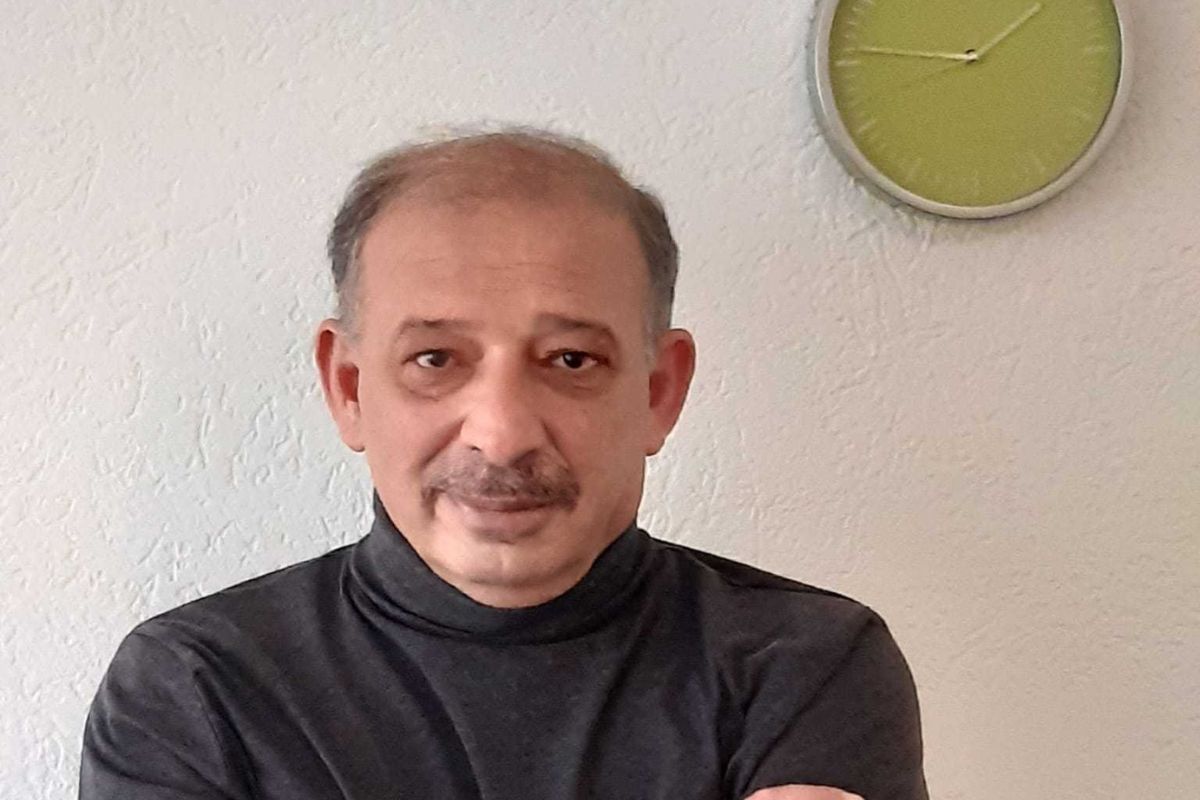
“In recent years, the Azerbaijani authorities have carried out arrests targeting political groups, including political prisoners, public figures, and civil society activists. These arrests have resulted in lengthy prison sentences. Even the minimum sentences are around four years, while the overall prison terms range from eight or nine years to as much as 15 or 16 years.”
He says that “these are unprecedented sentences” and that such sentencing practices did not exist in the past.
The analyst recalls that, in earlier years, most political prisoners served much shorter prison terms. According to him, “we knew that, with a few exceptions, they did not remain in prison for more than two years.” Mirgadirov adds that these individuals were often released “either through court decisions or, more commonly, presidential pardons as a result of international pressure.”
According to the analyst, international pressure is now at a much lower level, and there are no meaningful negotiations on the issue. He says that “at present, there is no real bargaining process underway regarding political prisoners.”
“This issue is not a major subject of discussion between the West and Azerbaijan. At present, political prisoners are not the main bargaining chip; other geopolitical issues have taken precedence. These include reducing Russia’s influence in the South Caucasus, the Middle Corridor, and security matters.”
He adds that “the issue is not limited to energy resources; it concerns broader development and geopolitical projects.” Mirgadirov argues that Azerbaijan is not a decisive country in terms of energy supplies, but that it plays an important role as a transit state through the Middle Corridor. According to him, “the disruption of the Northern routes and the potential of the Middle Corridor have made this route highly significant for the West.” As a result, he believes that human rights issues have taken a back seat.
The analyst adds that a perception has emerged in the West that Azerbaijan is acting in line with certain geopolitical interests, and that, as a result, human rights issues are no longer being raised as forcefully. According to him, the Azerbaijani authorities are also aware of this and “feel more at ease.”
“The Azerbaijani authorities also understand that there is no serious international pressure, and as a result they are acting more harshly at home. One of the objectives is also to instill fear in society.”
He also argues that the economic situation is contributing to the process: “The economy is dominated by monopolies, and the recession is increasing social tensions.”
Therefore, Mirgadirov believes there is a possibility that social protests could turn into political protests.
“In the future, especially ahead of the 2028 European Political Community summit in Baku, this issue may return to the agenda, and the question of political prisoners could once again become a bargaining issue.”
Former political prisoner and human rights defender Arif Yunus believes that the human rights situation in Azerbaijan depends directly on Western political reactions. According to him, “in periods when the West applied pressure, the authorities and personally Ilham Aliyev responded to it.”
The expert states that international political priorities have changed in recent years.
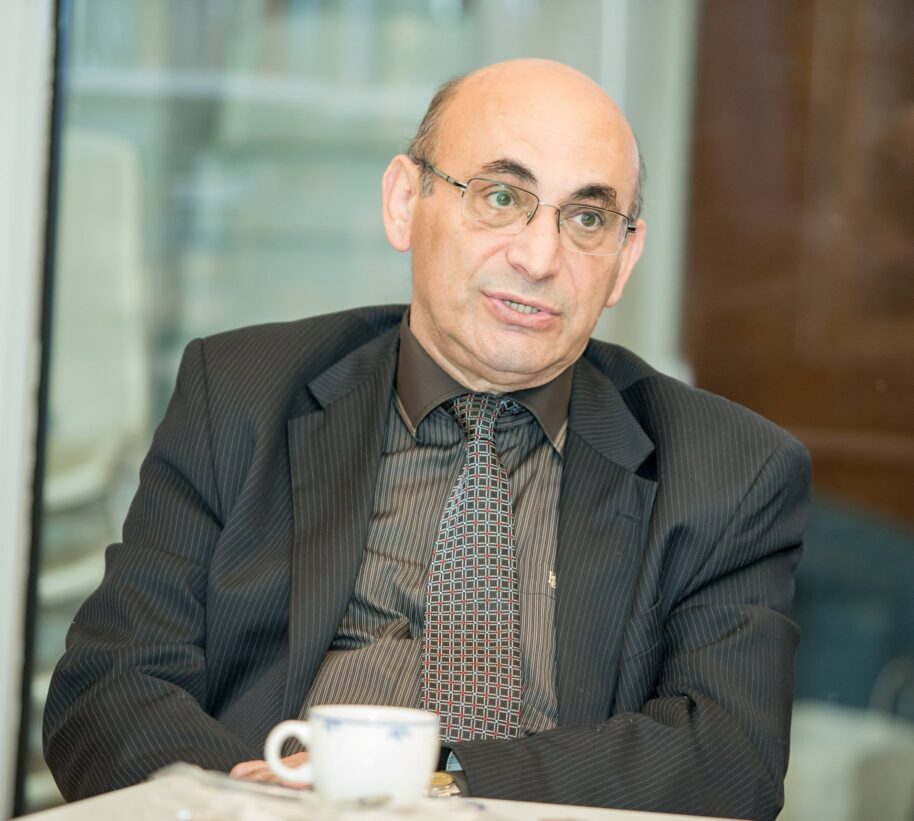
“In the United States and Europe, the main focus is on the war in Ukraine and the Russian threat, which is why human rights issues have been pushed into the background.”
Yunus notes that the approach to human rights issues in the United States has also changed. According to him, “there have been structural changes within the human rights department of the U.S. State Department, and this has affected responses.”
He adds that, at present, this issue is not a priority for the United States.
According to Arif Yunus, although Europe issues certain statements, its main focus lies elsewhere. He says that the European Parliament and the Parliamentary Assembly of the Council of Europe adopt documents concerning political prisoners in Azerbaijan. However, he notes that “the main attention is focused on Ukraine, Russia, and energy issues.”
Yunus believes that Azerbaijan’s energy resources and geopolitical position are important for Europe, and that this is why strong pressure mechanisms have weakened.
According to him, “European countries are temporarily forced to tolerate the Azerbaijani authorities.”
The expert states that the Azerbaijani authorities understand this situation well and therefore act more harshly. He says that “the authorities believe this situation will be long-term and will not change.”
According to Yunus, this approach is mistaken because the political situation can change. He says that “when political changes occur in the United States and Europe, the previous pressure mechanisms will be reactivated.”
Thus, based on the specific facts cited and the statements of experts, it is possible to conclude that the observed tightening of punitive policies, domestic law enforcement practices, and the weakening of international responses appear as parallel processes, and whether these trends will be long-term remains a subject of separate discussion.