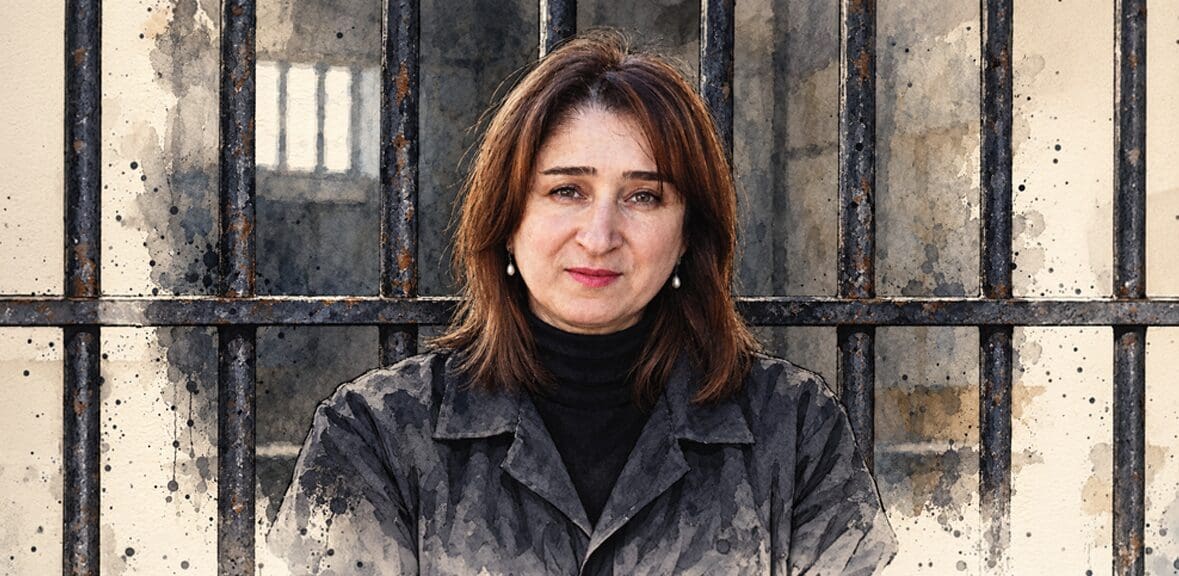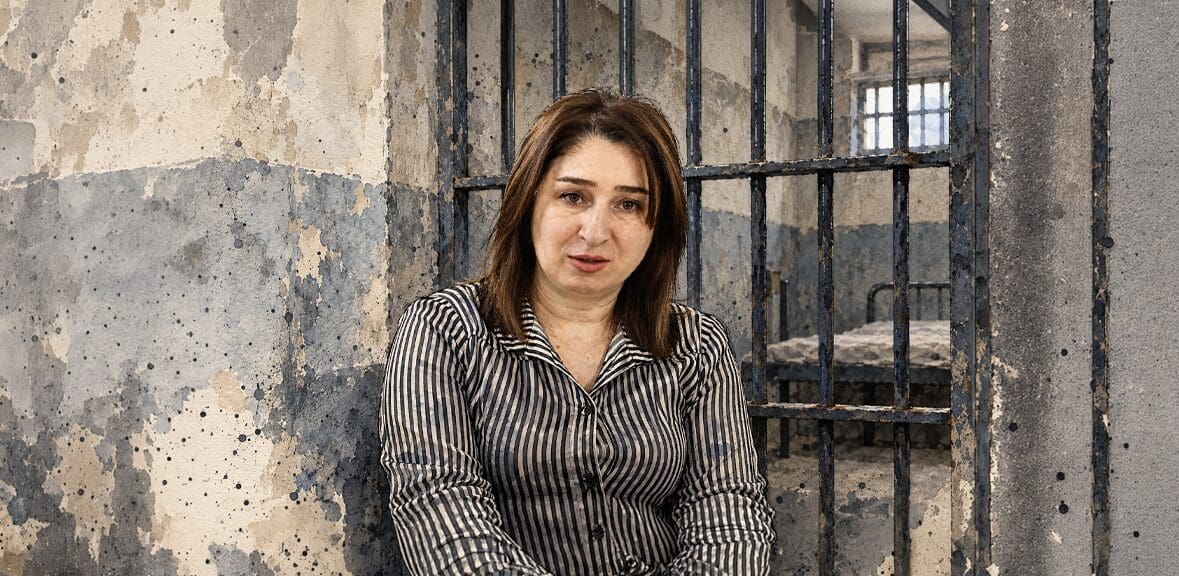
The trial in the “Meydan TV case” continues.
At the next hearing held at the Baku Court of Serious Crimes on August 7, three more detained journalists in the case, Aytaj Tapdig (Ahmadova), Aysel Umudova and Nurlan Libre (Gahramanli), gave testimony.
At the beginning of the hearing, presiding judge Zaur Hajiyev announced that the court clerk had been replaced.
Some of the 12 journalists on trial are being held in a glass cabin, while others have been allowed to sit next to their lawyers.
The cabin has glass partitions, and through these gaps it is possible to hear the voices being spoken inside. Guards from the Penitentiary Service, both men and women, were stationed along these partitions, blocking the journalists inside. This prompted the journalists to protest.
“It is as if terrorists are being put on trial here,” argued Shamsad Agha (Agayev), editor-in-chief of the “arqument.az” website.
Meydan TV journalist Natig Javadli said that even the Gestapo’s trials were not like this.
The judge ordered the guards to move away from the glass cabin following the protests.
The judge then read out the contents of a letter sent to the court by the Main Medical Department of the Ministry of Justice regarding Aytaj Tapdig’s health problems. The letter stated that Aytaj Tapdig should undergo an outpatient examination.
The journalist objected, saying that after a doctor examined her in the presence of Vugar Hasanov, head of the medical unit at the Baku Pretrial Detention Facility where she is being held, she was told that she urgently needed surgery. According to Aytaj Tapdig, she has a deviated nasal septum, which causes her difficulty breathing.
The journalist added that, despite this medical opinion, undergoing another outpatient examination would be a waste of time:
“They write that I need an outpatient examination without even coming to see me or examining me. I need to undergo surgery directly.”
Lawyer Rovshana Rahimli said that both Aytaj Tapdig and Ulviyya Ali (Guliyeva) need to issue powers of attorney to their relatives regarding civil matters. She therefore made an oral motion asking that a notary be allowed to visit them at the detention facility for this purpose. The judge said the motion should be submitted to the system in writing, after which it would be reviewed and the matter resolved.
The lawyer of photojournalist Ahmad Mukhtar, one of the defendants, filed a motion to place him under house arrest. The lawyer said that Ahmad Mukhtar’s young wife has cancer and that the diagnosis was confirmed several days ago.
“It became clear from the documents on August 4. I will not disclose the stage of the illness in the courtroom. Ahmad Mukhtar did not evade the investigation and appeared voluntarily whenever he was summoned to give a statement. He is a well known photojournalist. He has no intention of influencing anyone. This is an urgent motion. The family is in a situation where this matter needs to be considered and a decision made urgently.”
After deliberation, the judges declared the motion denied. They noted that the witnesses had not yet been questioned and that they still had the opportunity to influence the case.
The testimonies then began. Aytaj Tapdig, one of the Meydan TV employees, was the first to testify.
“Wherever there was arbitrariness, violation of law, state crime, torture, fraud – Meydan TV was there”
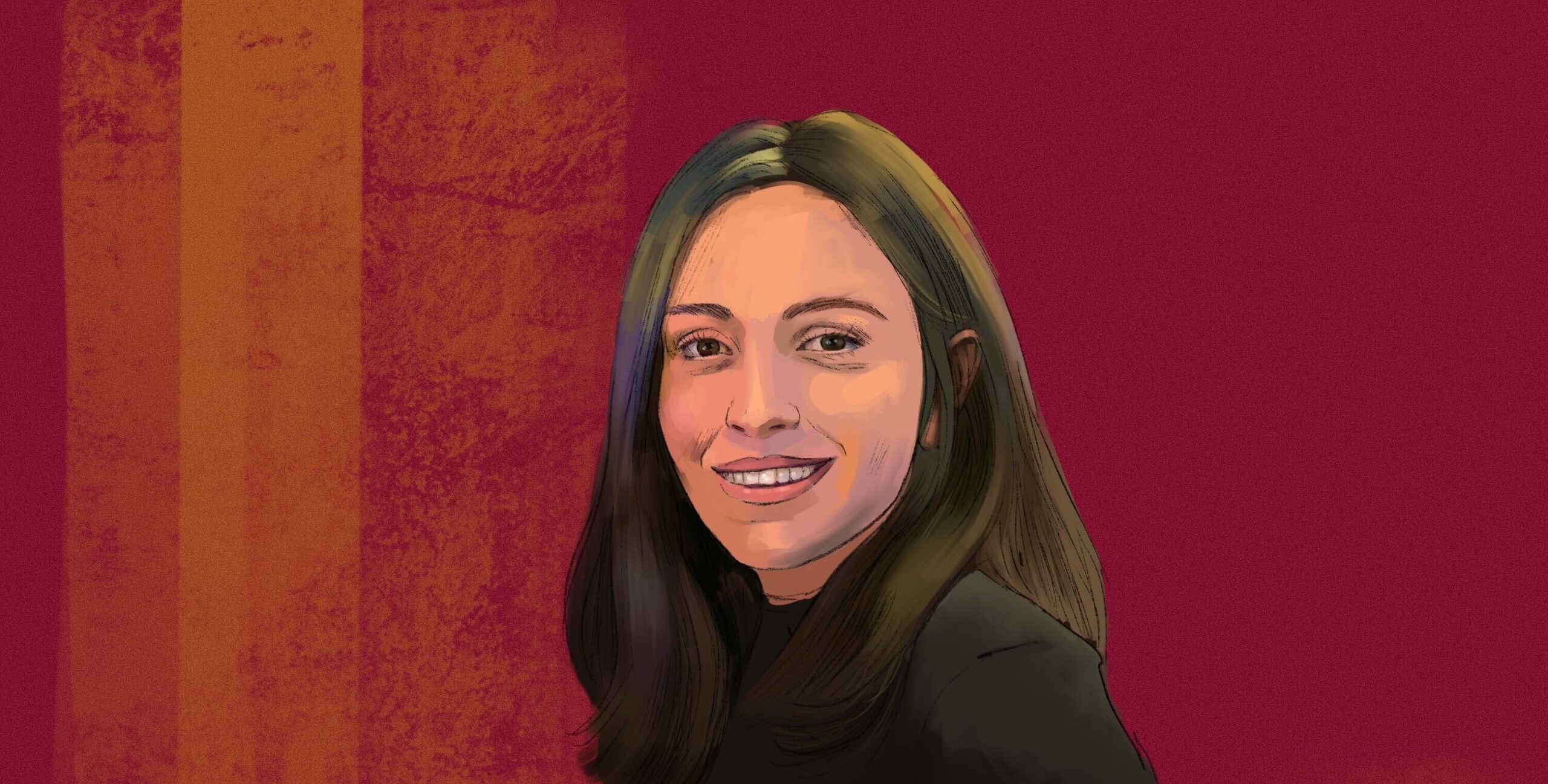
“Writer Milan Kundera compares asking questions to a knife tearing through a canvas covered in sketches. Through the opening, one can see what lies hidden behind it. The greatest enemy of totalitarian governments is a person who begins to ask questions. A person who asks questions is searching. They are looking for the truth, for what really happened. They are not satisfied with what is presented to them and want to know the truth. It is human nature to seek knowledge. The media’s mission to convey the truth responds to one of humanity’s most fundamental instincts: the need to know what is true. Knowing the truth is a right. If that is considered a crime, then being human itself becomes grounds for prosecution.
In Azerbaijani society, freedom of thought and expression is under attack by the Aliyev government. Independent media, which serves as the voice of the people, plays the role of a shield for society against the authorities in authoritarian countries like Azerbaijan by bringing hidden facts to light and lifting the veil over the truth. This is precisely where we clash with the authorities.
Journalists expose their lies, threatening their desire to keep society under control through all forms of coercion. But the truth is our only weapon against manipulation and lies of every kind. We have a moral responsibility to society, and so do you. Guided by this responsibility, Meydan TV has shown those living in incomparable prosperity alongside the vast majority struggling in poverty. We have demanded greater accountability from government officials. No event of public significance has escaped the attention of our cameras.
Wherever there was arbitrariness, violation of law, state crime, torture, fraud – Meydan TV was there. We have given voice to the pain people have kept bottled up and given them hope. As a result, we have been arrested and persecuted for challenging the system. But our imprisonment is the price we have paid for our commitment to freedom of expression. A value becomes truly meaningful when we are willing to pay a price for it.
Everyone knows we came to Kurdakhani of our own free will. The story that brought us here is a story of persecution and exile.
When Ganja was bombed during the Karabakh war, we managed to break through the restrictions imposed on independent media and went to the scene to report on what had happened. I asked a woman who had lost her home in the war and was standing among the ruins of her past, “Has the government provided you with a place to stay?” A pro-government media representative, realizing I was an independent journalist from my question, shouted, “Meydan TV is here!” Shortly afterwards, police surrounded us, forced us into a car and drove us away. To make sure we left, they handed us over to a taxi driver and expelled us from Ganja.
When the Lachin road was blocked, we went to Shusha to cover the government-organized fake environmental protest. It was such a staged protest that we were even able to board the specially arranged buses posing as representatives of a non-governmental organization. Near the end of our filming, officials from the Presidential Administration realized that Meydan TV was there. We were detained by masked men, forced into a special vehicle and expelled from Shusha in the same way.
Independent media thoroughly covered the courageous protest by the people of Soyudlu, who were poisoned with zionide. Because the people of Soyudlu refused to remain silent, the small village has remained under blockade for four years now. Everyone in the country with a conscience should be ashamed of this every day.
The next time we tried to go to the village after the protest, our phones were tapped. We were followed and prevented from reaching Soyudlu. In this way, the authorities’ pursuit of us followed us all the way to prison.
Truth is like opium. Once you become addicted to it, you cannot pretend it does not exist. You want to descend into the deepest wells, search for it and uncover it. And wherever we go, we take our cause with us.
In the detention facility, our handheld cameras became our eyes. We report the violations we witness to the media. After we reported on an incident of torture in the detention facility, they could not drive us out of the facility, so this time they drove us out of the cell where we were staying.
Despotism punishes journalists for having the courage to show the truth. In a country governed through fear and coercion, the press shows people that it is possible to question power itself and speak without fear.
By creating space for views that challenge the dominant narrative, independent media keeps the critical spirit alive. As John Stuart Mill reminds us, diversity of opinion must always be visible to people, or they will lose sight of the very possibility of diversity.
Licensing journalism and recognizing it as legitimate only when practiced by a particular, compliant group is a way of suppressing freedom of expression. The regressive Media Law adopted in 2021 and tightened further in 2025 has marginalized independent media by effectively placing it outside the law and pushing it toward extinction.
In the digital age, only people with such an outdated mindset could come up with such a “brilliant” idea. At the same time, Ilham Aliyev claims to be creating data centers for artificial intelligence in Azerbaijan and travels to European countries that host leading technology companies with similarly ambitious offers.
Instead, he has laws imported from friendly dictatorships passed through an illegitimate parliament. He calls the written form of power “law” and uses it to silence his critics.
He wants Azerbaijan to serve as a data center for artificial intelligence, yet sees the independent initiatives of natural intelligence as a threat.
I ask: if a law violates fundamental human rights, punishes the truth and makes us implicated in injustice, why should we accept it? Why should we recognize a law that is imposed without accountability to society, without public debate, and that is merely an expression of one man’s dictates?
After all, if a system isn’t just, blindly accepting and obeying it means giving up our moral responsibility. No, this isn’t law. It’s a whip over society.
Now, supposedly under these laws, we are being accused of bringing foreign currency into the country. When will you account for the money you have taken out of the country in suitcases? Let Ilham Aliyev first explain to the public the source of his family’s vast wealth.
In any case, the amount you have set up for 12 people is nothing compared to the 500 million euros invested by the Aliyev sisters in the legendary Mandarin Oriental Bodrum resort complex.
The most valuable piece of physical evidence seized from my apartment was the photographs of the Abzas Media journalists who were arrested before us, which I had hung on the wall.
As the investigation came to an end, some of my belongings were returned, but they did not return the photographs of my colleagues. In principle, I believe they were entirely justified in treating them as material evidence. Of course, it is easier to lock up people who speak and write than to bring the country into the light.
Ilham Aliyev wants to turn the Azerbaijani people into an army of silenced, expressionless individuals. But the government will not be able to escape the reality of Azerbaijan. We will pursue the truth, and the truth will pursue it wherever it goes.
The system that seeks to crush dissenting views under the hegemony it has built does not hesitate to take further steps to extinguish the last flickers of free thought. The New Azerbaijan Party government keeps young minds under pressure, leaving no fertile environment in the country for innovation and creativity to take root.
Young people who express themselves through art and create graffiti are arrested and punished. After all, how can an act beyond the control of the authorities be tolerated in a dictatorship? Aliyev understands that a young person’s free expression, born of a creative spirit, could mark the beginning of his downfall.
For more than half a century, have the Aliyevs not kept the entire country deliberately devoid of colour and aesthetics by refusing to share power with anyone?
Now, total control over people in the country is being formalized. Ilham Aliyev is introducing new mechanisms that expand the authorities’ ability to monitor the population.
Last November, he signed a decree establishing a new centralized digital system. Under the new system, called MIRAS, data collected from various government agencies covering all spheres of citizens’ private lives will be consolidated in a single database, with the State Security Service responsible for overseeing it.
In other words, the State Security Service will be able to access through a single system everything from which country a person travels to for a holiday to how much they pay in utility bills, their religious beliefs and their trips to Karabakh. Someone caught on security cameras watching people around the clock will, at the same time, be under the watchful eye of the State Security Service.
And all of this will take place without even the need for a formal court order.
This systematic control is particularly evident in the digital sphere. The Ministry of Internal Affairs has established a department to monitor social networks. Monitoring social media is also among the responsibilities of the Media and Broadcasting Council, another new government creation.
On social networks, the only platforms where people can freely express themselves, a post, like or comment can put their freedom at risk. In a country of prohibitions, a single tap of a finger can now be grounds for arrest.
Despotism forces people into self-censorship by building a prison inside their minds.
The persecution of freedom of expression takes away our freedom to ask questions. We must not surrender our lives to those in power and build our lives within the narrow confines of what is permitted and what information we are allowed to receive. We must not settle for fragments of truth; we must keep asking questions.
Obedience to the Aliyevs is not the destiny of the Azerbaijani people. If oppression is one side of the coin, the other is the longing for freedom and the struggle for it.
Sadly, in this country, you either have to stand on your knees or stand on your feet. I wish all of us the strength to stand tall.
Let us not lock our doors to hope and courage. Let the resistance for freedom that they cannot extinguish keep them forever on edge.
And finally, I want to say this: even if it costs us our lives, let truth prevail.
“The government took that away too.”
At the end of her testimony, Aytaj Tapdig recalled journalist Rasim Aliyev, who was beaten to death in August 2015:
“Tomorrow marks the anniversary of Rasim Aliyev’s death. If he had not been killed, his trial would also have been held in one of these courtrooms.”
Aytaj Tapdig asked those in the courtroom to observe a minute of silence in memory of Rasim Aliyev.
Those in the courtroom stood to honor the journalist’s memory.
After delivering her statement, the journalist declined to answer the prosecutor’s questions:
“I would answer the prosecutor’s questions in court. But there is no court here.”
In response to questions from her lawyers, she said that the €300 taken from her home was compensation awarded by the European Court for the travel ban imposed on her between 2015 and 2019. The Azerbaijani government had paid her the compensation, and the €300 was what remained of that money:
“The government took that away too.”
Later, another Meydan TV employee, Aysel Umudova, gave her testimony.
“We have put the ruling dynasty’s stories of development side by side with what our phone cameras have captured.”
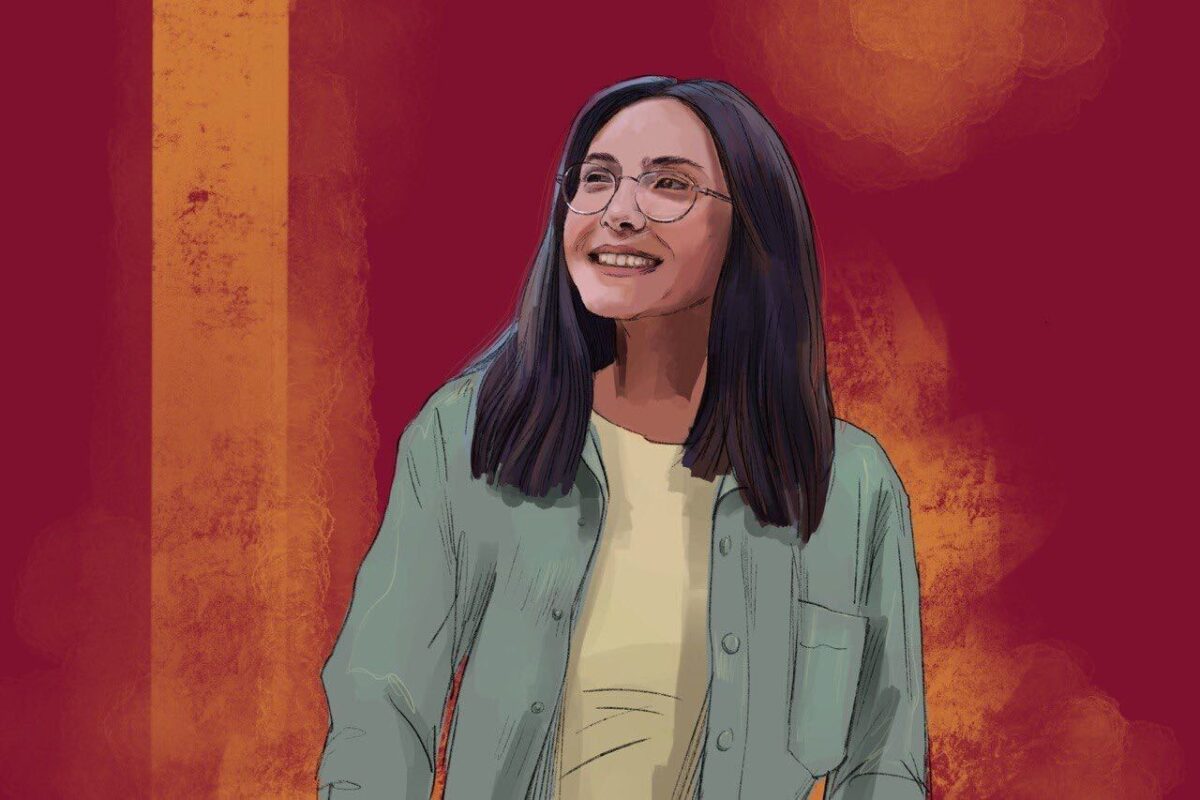
“I am Aysel Umudova, and I have worked as a journalist at Meydan TV for 12 years. Throughout my career, I have met hundreds of different people and been a guest in many different homes while reporting. My stories were usually about people in need and low income families, and were filmed in their homes.
Today, I want to tell you about one of those homes. I once went to film a family that had turned two railway carriages into a home for themselves.
Let me describe the house to you. When you entered through the narrow doorway, you had to lower your head. You could not even walk upright inside because electrical wires, resembling spider webs, crisscrossed the ceiling.
The filming took place in winter. The cold that had seeped into the metal walls of the carriages had spread throughout the room so intensely that we could see our breath as we spoke.
The homeowner was an elderly woman who made a living sweeping the streets. She was quite old, but still had years to go before reaching retirement age.
In the room that served as the kitchen, hallway, living room and bathroom all at once, there was a small cabinet. Inside it were a few mismatched dishes and a neatly framed photograph of Ilham Aliyev…”
The president’s portrait in a home like this caught my attention. When she noticed me looking at it, she nodded toward the picture and said, “He has no idea about any of this. They tell him everything differently.”
The woman believed that Ilham Aliyev knew nothing about the retirement age that kept getting further away as she grew older, the hundreds of families across the country spending their lives in railway carriages, election fraud, relentless price increases and widespread economic hardship.
She believed that if the government knew about these problems, they would be solved immediately. That was why she had invited me into her home to film.
But by ordering our arrest, the president showed that he sees and knows everything. He even knows and monitors the journalist behind the camera. What interests him is not the problems of the woman he has left helpless in front of the camera and who sees the media as her last hope, but the identity of the journalist filming her.
The repression showed that Aliyev does not want others to see or know about the problems he himself sees. He found the solution by turning off those cameras.
But did imprisoning journalists solve the systemic problems facing that woman?
Since our arrest, the prices of transportation, utilities and food have continued to rise, while the country’s economy has remained stagnant. The municipal elections held in 2025 were once again marred by carousel voting and other forms of electoral fraud. Reports of people being tortured or killed in police custody continued to make headlines on independent media outlets.
After our arrests, laws governing information were tightened further. Punitive measures were introduced against posts that did not serve the government’s interests, under the guise of morality. If the closure of media outlets and the arrest of journalists were intended to make the people less visible, the laws that followed were designed to silence their voices completely.
But that did not happen. Citizens continued to share their problems with independent media outlets. The New Azerbaijan Party government should know that the voice of a person in pain only grows louder.
As I am originally from Nakhchivan, I am familiar with the various stories that have circulated there about people who spoke out being silenced once and for all. There is a well known saying in Nakhchivan: “Here, anyone who demands their rights is sent to a psychiatric hospital and driven mad.”
Just recently, President Ilham Aliyev signed amendments to the Law on Psychiatric Care. Under the amended law, police can place a citizen in a psychiatric facility without the consent of the person or their family.
For this, an opinion from the prosecutor and the Ministry of Internal Affairs, along with a court ruling, is sufficient. Given that in Azerbaijan neither the prosecution, law enforcement agencies nor the courts are in a position to make independent decisions, and particularly in politically motivated cases, the ruling family’s position is taken as the guiding consideration, the amended law could also be described as a new tool for silencing dissent.
During Vasif Talibov’s rule in the Nakhchivan Autonomous Republic, people with opposition views were reportedly forcibly placed in psychiatric institutions. The latest amendments could now lead to the Nakhchivan model being applied across Azerbaijan.
Apparently, with the prisons already packed to capacity, the government has begun scouting for new places to “rehabilitate” people.
Throughout my career, I have tried to be the voice of those who cannot speak and those forced to hide who they are. A journalist must understand every language, the language of everyone. The language of a woman who has suffered domestic violence and cannot speak out, the language of people persecuted because of their sexual orientation, and the language of animals subjected to systematic violence and mistreatment by some citizens and government institutions.
In this country, no living being can escape the wrath of those in power.
The ruling family also presents itself to society as a family of animal lovers. The “Toplan” animal shelter, which began operating in 2019, is funded by the Heydar Aliyev Foundation and was headed by the President’s daughter, Leyla Aliyeva.
For years, the organization operated openly and later in secret, and was involved in the mass killing of animals. In 2022, the organization was engaged in legal disputes with animal rights activists. The fate of dogs taken from the streets in inhumane conditions became known to the public through Meydan TV’s reports.
The organization, whose entrance was decorated with colorful letters spelling “TOPLAN Animal Shelter” for appearances’ sake, had smoke rising from its chimney from animals being burned inside.
Toplan became so notorious that the authorities were eventually forced to announce that the organization had ceased operations in October 2024, shortly before COP29 was held in Baku. Around the same time, ahead of COP29, cosmetic amendments were also made to the law concerning the “cruel treatment of animals.”
The amendments, which have remained ineffective to this day, were simply another attempt to keep up appearances. Law enforcement agencies do not punish people who treat animals cruelly, and in a system that thrives on the powerful crushing the weak, animals become the latest victims.
Throughout our statements, you have repeatedly told us to “stay on topic” in an attempt to silence us and avoid the cognitive dissonance of hearing about the injustices taking place. You want me to speak to the substance of the case and defend myself against the allegations and incidents mentioned in the indictment.
One of the materials presented as evidence in the indictment is the fact that my name appears in an application called Getcontact under labels such as “Aysel Umudova,” “Journalist,” “Video Recording,” and “Meydan TV.”
But I do not deny that I am Aysel Umudova, that I am a journalist, that I make video recordings, or that I work for Meydan TV.
Images of me enjoying time with my friends at a restaurant, out for a walk, or riding a cable car are included as evidence in what is called the indictment, a document of shame. Yet I myself shared those photos on my social media accounts.
Would anyone commit a crime, immortalize it in photographs and then, to make matters worse, post those photographs on their social media accounts?
Do you see what kind of disgrace we are confronted with when we speak about the case in context?
You may be wondering why we are being imprisoned. It is because, together with the friends whose photographs I proudly shared and who I now absurdly find myself accused of being part of an organized criminal group with, we have exposed the gulf between ordinary people, who are left with a big zero after using their salaries to pay their debts, utility bills and other basic expenses, and the country’s president and his inner circle, who have no idea how much wealth they possess.
You may be wondering why we are being imprisoned. It is because, together with the friends whose photographs I proudly shared and who I now absurdly find myself accused of being part of an organized criminal group with, we have exposed the gulf between ordinary people, who are left with a big zero after using their salaries to pay their debts, utility bills and other basic expenses, and the country’s president and his inner circle, who have no idea how much wealth they possess.
The gulf between those who cannot account for their wealth and those who have lost track of how much they possess…
We video journalists have a motto: “Don’t tell, show.” Staying true to this principle, we have documented events and presented them to the public accurately. We have never spread lies. We have reported the news without manipulation, showing the facts and exposing the authorities through the numbers.
We have placed the ruling dynasty’s stories of development side by side with what our phone cameras have captured.
In fact, our imprisonment has allowed us to see and shed light on another side of the country. Our audience now knows what stories have been destroyed inside the “small prison.” Whether people love us or dislike us, no one has the slightest doubt that we have told the truth.
Independent journalism has seen the fruits of the trust it has built over the years, thread by thread, during our time in detention. The reports coming out of the detention facility and prisons where we are being held leave no room for doubt among our audience, while our bylines beneath those reports are as powerful as releasing video footage ourselves.
For journalists who have devoted their lives to reporting the truth, this is the greatest expression of gratitude.
And the trust built over all these years cannot be destroyed by the current government, not even if heaven and earth were to come together.
Aysel Umudova answered questions only from her lawyer, Rovshana Rahimli. She also spoke about how she was arrested and the search of her home. She said that she was not present during the search of her home.
“My cat was the only one there.”
Later, Nurlan Libre gave his testimony in court.
“True journalism is conscience made public.”
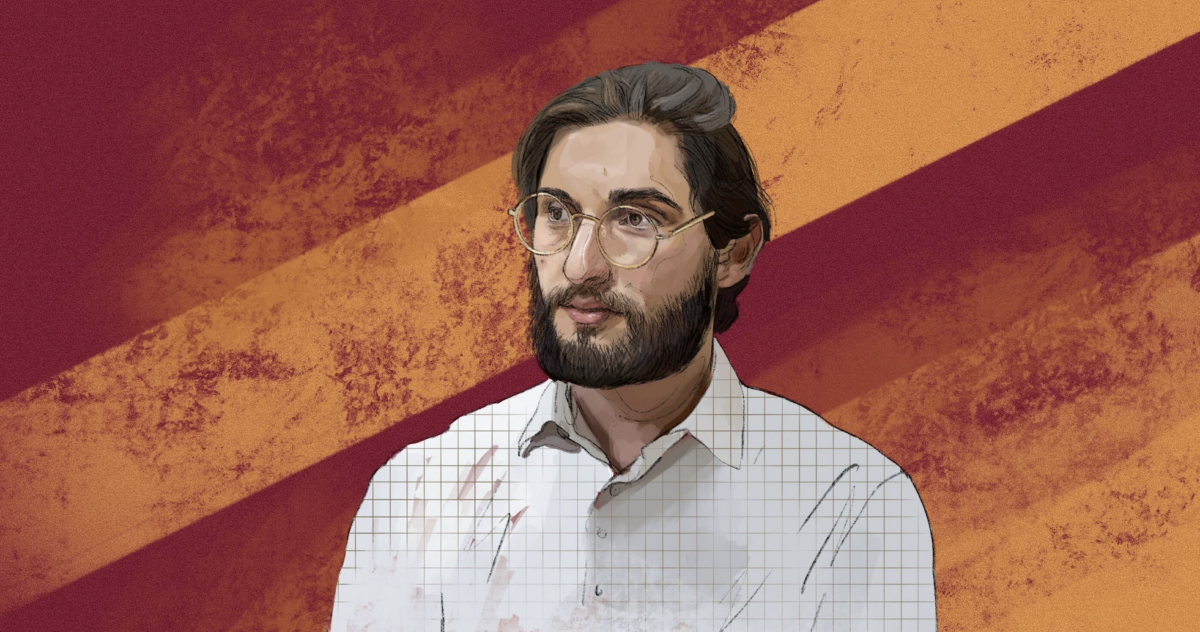
“I want to begin my closing statement by saying that I am not standing here to ask for an acquittal. Nor am I speaking in my own defense. For a person imprisoned on fabricated charges for telling the truth, standing here under accusation is itself an exposure of the system that punishes people under the guise of a trial. What is on display in this courtroom is less my fate than the Azerbaijani government’s relationship with the truth.
In these court proceedings, which resemble a poorly staged performance, the fact that my colleagues and I are being tried as journalists means that freedom of speech, criticism, free thought, and society’s right to strive for a better life are themselves being put on trial.
The charges brought against me also confirm what I have said about this performance. At first, they called it smuggling. Then they escalated and inflated the case, dressing up a politically motivated order in legal terminology.
It is not difficult to construct a criminal case on paper, but everyone knows that the real reason for this trial is not that I illegally brought something across Azerbaijan’s border. It is that I crossed the border drawn by the state through fear by bringing out stories that reflect the problems in society, giving a voice to people they wanted silenced, and making visible the truth they had tried to erase.
If this is my crime, then let it be known that it is the conscience of Azerbaijani society that is on trial here.
Karl Marx, a thinker the Azerbaijani government has long viewed with hostility for class reasons, once wrote that no one fights against freedom itself; at most, they fight against someone else’s freedom.
But scenes like the one unfolding in this courtroom are not unfamiliar in Azerbaijan’s history of governance. The country remembers the purges of 1937 and 1938, when poets, scholars, teachers and creative people were destroyed after being branded “enemies of the people.” It also remembers how, in recent years, independent journalists have been silenced through fabricated economic charges.
From the case brought against Khadija Ismayilova to the wave of fabricated charges brought in recent years against Abzas Media, Toplum TV, Meydan TV and other independent voices, the same political technology is repeatedly used, and its essence is well known to us: first, a critical person is singled out; then an article of the Criminal Code is tailored to the case against them; finally, society is told that this is supposedly an ordinary criminal case.
Whenever something is written in the independent media about those of us who have been imprisoned, political prostitutes who are paid with taxpayers’ money and troll for the YAP government immediately go into a frenzy and try to repeat the same narrative.
It is striking that although the costume of repression changes, its essence does not. In 1937, people were accused of being “enemies of the people.” Today, they are called “smugglers,” “illegal entrepreneurs,” “tax evaders” or “users of forged documents.” But then, as now, what the state fears remains the same: freedom of speech.
The contradiction is that the current Constitution shamelessly declares Azerbaijan to be a democratic and law governed state, and even describes it as a republic, meaning a state belonging to the people.
I quoted Karl Marx earlier. His fellow thinker and collaborator Friedrich Engels described the state as a special force that emerges from society, rises above it and gradually distances itself from it. He added that behind this force stand armed men, prisons and an apparatus of coercion.
Today, that theory is being proven directly in Azerbaijan, in the lives of Azerbaijanis. We, as Azerbaijanis, must now understand that when someone is imprisoned for exercising freedom of speech, it becomes starkly clear that the state is not a state for everyone. Instead, it operates as a class based political machine that punishes free speech that refuses to submit to it and does not want to submit.
My imprisonment is yet another confirmation of how that machine works.
I am a journalist. In authoritarian Azerbaijan, this is more than a profession; it is a position. Because true journalism is the public expression of conscience. It means speaking for someone when they are silenced, making someone visible when the state has rendered them invisible, and turning someone’s suffering into an audible voice when it is buried beneath government statistics, fear and censorship.
I believe this is exactly what I have done. And apparently, in our time, living the truth as a matter of principle is enough for a person to be declared a criminal.
Do you know why you are afraid of us, independent journalists, and imprison us to silence us? Because you think that by silencing us, you can also imprison the voices of people who cannot survive on low wages, citizens who are turned away from government offices for demanding their rights, and a society suffocating under corruption, injustice and lies. Because a free press is the people’s right to know the truth about their own fate.
Perhaps a society deprived of this right may appear calm for a while, just as you judges, prosecutors and other obedient arms of the ruling class would like it to be. But this calm is not stability. It is a silence created by fear, rotting from within. And when that silence sooner or later transforms into something else, you will be crushed and left powerless in the face of the outcry that rises from it.”
Nurlan Libre’s testimony could not be completed within the time available, so it was decided that he would continue giving his testimony at the next court hearing.
The next court hearing has been adjourned until September 14 at 2:00 p.m., when Nurlan Libre will continue giving his testimony.
Arrests and escalated charges in the “Meydan TV Case”
On December 6, 2024, Meydan TV employees Ramin Deko (Jabrayilzade), Aynur Ganbarova (Elgunes), Aysel Umudova, Aytaj Ahmadova (Tapdig), Khayala Aghayeva and Natiq Javadli, as well as civil society member Ulvi Tahirov, were arrested.
Those detained in connection with the case were charged under Article 206.3.2 of the Criminal Code, which concerns smuggling committed by a group of people acting in prior agreement.
On February 5, 2025, Shamshad Aghayev (Agha), editor in chief of the news website Arqument.az and a journalist who collaborated with Meydan TV, was arrested. Other journalists were subsequently arrested in connection with the case: Nurlan Libre (Gahramanli) on February 20, Fatima Movlamli on February 28, Ulviyya Ali (Guliyeva) on May 7, and Ahmad Mukhtar on August 27.
On August 28, the charges in the “Meydan TV case” were escalated, with those arrested in connection with the case facing charges under a total of seven articles of the Criminal Code.
The arrested journalists reject the charges and say they were imprisoned as a result of a politically motivated order, with the aim of silencing independent media and critical voices in the country.