Reporters Without Borders (RSF), the international press freedom organization, has welcomed the French court’s verdict in the case concerning an attempted assassination of Azerbaijani blogger Mahammad Mirzali, who lives in France.
In its statement, the organization said that the Criminal Court of Rennes sent a clear message by sentencing the defendants to up to 30 years in prison, signaling that transnational repression carried out by authoritarian regimes on European soil will not go unpunished.
The trial took place on June 10. According to the verdict, 8 of the 9 defendants accused of attempted murder committed as part of an organized criminal group received heavy prison sentences, while 1 was acquitted. The alleged organizer of the attack, Emin Gasimov, was sentenced to 30 years in prison; Rovshan Gojayev, who is internationally wanted, received 25 years in absentia; Mehraj Zarbaliyev received 18 years; Emin Zamanzada received 15 years; Rza Malikov received 13 years; and Khazar Khankishiyev, Ramil Sultanov, and Chingiz Ibrahimov each received 5 years in prison. Faig Pashazada was acquitted due to lack of proven charges. All convicted individuals were also given a lifetime ban on entering France after serving their sentences.

Mahammad Mirzali was attacked on March 14, 2021, in the city of Nantes, where he was living, by unknown individuals. The blogger stated that there had previously also been an attempted attack against him using a firearm. Mirzali claims that the Azerbaijani authorities were behind both incidents. He is known as a critic of the Azerbaijani government. Azerbaijani officials have not made public statements regarding these allegations.

On September 15, 2025, Mahammad Mirzali was sentenced in absentia in Azerbaijan to 6 years and 6 months in prison. He was charged with participating in mass riots and calling for the violent seizure of power.
RSF’s statement, citing the court’s decision, emphasizes that the aim of the attack was not only to end one person’s life, but also to create an atmosphere of fear and terror among regime opponents. The court thereby formally confirmed the political nature of the assassination attempt.
One of Mirzali’s lawyers, Anri Karpentye, also described the ruling as an exceptionally severe and significant decision:
“By sentencing the perpetrators of this attack to up to 30 years in prison, the court clearly condemned a state-backed terrorist act committed on French soil.”
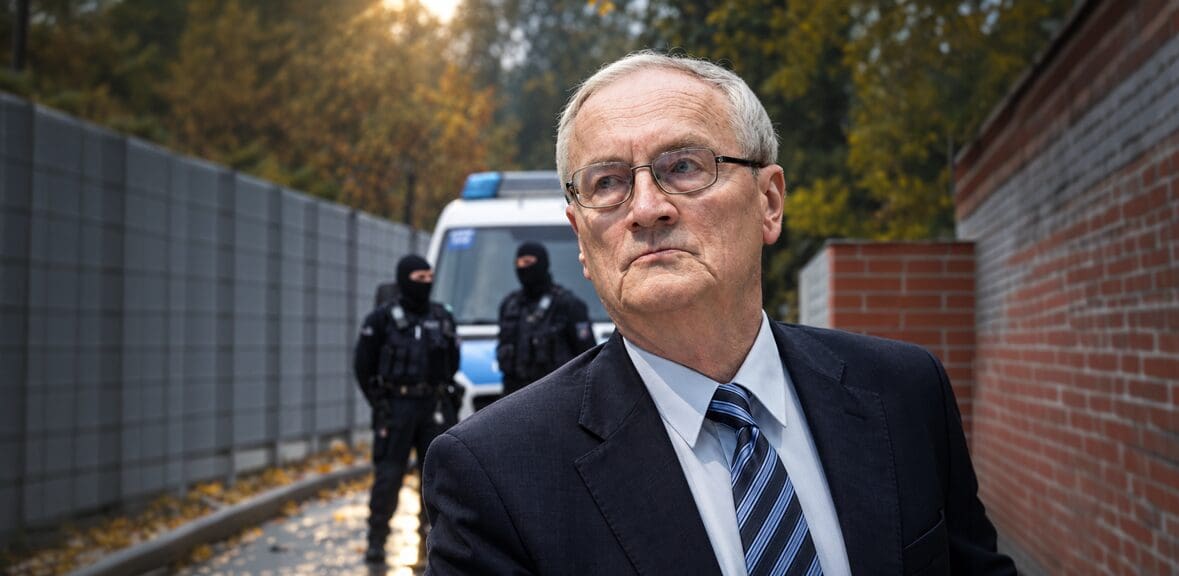
The court proceedings were held under heightened security measures in light of allegations regarding the defendants’ possible connections to criminal networks. RSF considers the case one of the most significant trials in French history concerning transnational repression.
According to Jan Kavelyer, this verdict is a strong warning to anyone who believes they can intimidate or silence journalists living in exile in Europe:
“This demonstrates that French justice is capable of firmly responding to the violence of transnational repression and that no state can cross its borders to crush opposition. This ruling should also mark a turning point for the entire European Union. Transnational repression is no longer a marginal phenomenon—it is a direct threat to journalists’ safety and the rule of law. A decisive and coordinated response at the European level is the only way to ensure such operations are never repeated,” said the head of RSF’s Eastern Europe and Central Asia division, Janna Kavelie.
RSF lists Azerbaijan among countries accused of using transnational repression methods, alongside Russia, Belarus, Iran, and China. President Ilham Aliyev denied any involvement of his government in the attempted assassination of Mahammad Mirzali in a 2021 interview with France 24, and accused RSF of taking a biased stance against Azerbaijan.
This trial comes amid growing international concern over pressure on independent media in Azerbaijan. Mirzali currently lives under French police protection.