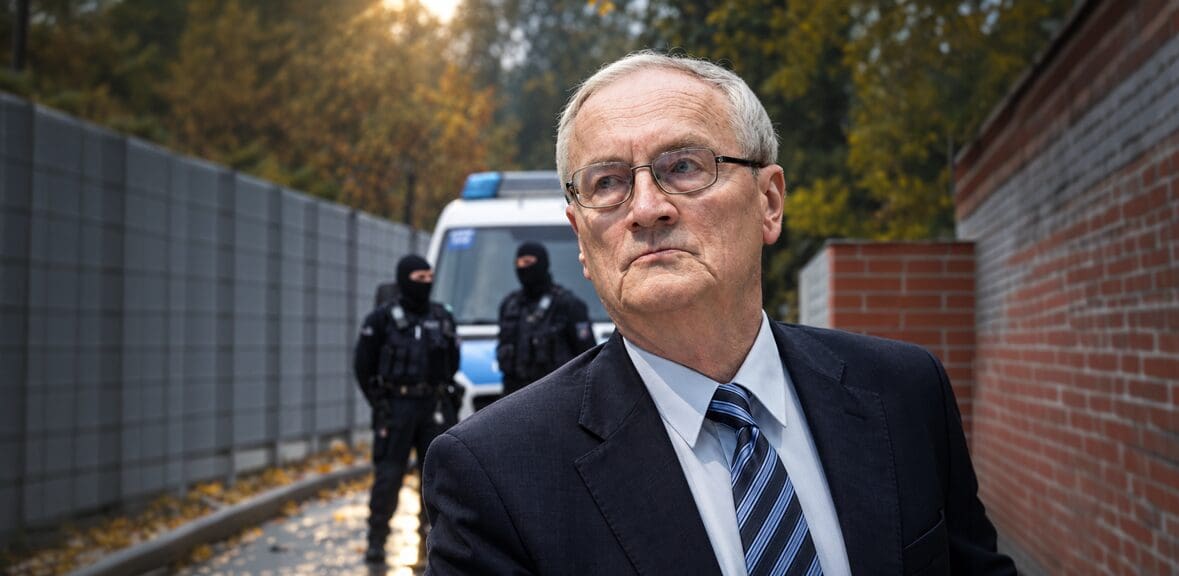
On 8 October, the European Parliament adopted a resolution concerning Ali Karimli, chairman of the Popular Front Party of Azerbaijan (PFPA), human rights defender Anar Mammadli, and other political prisoners in Azerbaijan. A total of 492 MEPs voted in favour of the resolution, 23 voted against it, and 60 abstained.
The document calls on the Azerbaijani authorities to release political prisoners, end politically motivated persecution, and comply with their international human rights obligations.
The resolution states that Ali Karimli, chairman of the PFPA, was detained on 29 November 2025 on charges of attempting to seize power by force. His pre-trial detention has been extended twice. The party leader, who denies the charges, could face life imprisonment.
Citing Human Rights Watch and Amnesty International, the document stresses that Karimli’s detention conditions have deteriorated significantly. It states that his access to food and drinking water has been restricted and that there is inadequate ventilation at the place where he is being held. It also notes that he has lost consciousness as a result of sleep deprivation and dehydration.
Amnesty International has warned that these circumstances could amount to torture or other ill-treatment.
Regarding Anar Mammadli, the document states that the human rights defender was sentenced to 13 years in prison in September 2026. It recalls that the European Court of Human Rights previously found his earlier detention to be politically motivated. Journalist Anar Abdullayev, who was charged alongside Mammadli, was sentenced to 12 years in prison.
The document states that these cases are part of a broader policy of persecution in Azerbaijan targeting opposition figures, journalists, human rights defenders, activists, and academics.
The resolution notes that more than 300 political prisoners, including Armenian prisoners, are being held in Azerbaijan. MEPs condemned the arrests of Ali Karimli, Anar Mammadli, and Anar Abdullayev, which they consider politically motivated, and called for their immediate and unconditional release.
MEPs also demanded that prisoners be provided with sufficient water, food, ventilation, and medical care, and that their rights to communicate with their lawyers and family members be protected. They called for allegations of ill-treatment to be investigated independently and for the full implementation of European Court of Human Rights judgments concerning the Mammadli group of cases.
The document calls on the Azerbaijani authorities to end the persecution of critics, journalists, human rights defenders, opposition leaders, and academics, release all political prisoners, and drop the charges against them.
It also demands an end to the misuse of criminal law to restrict the activities of non-governmental organisations and independent media.
The resolution welcomes the decision to allow economist and academic Gubad Ibadoghlu to travel to Germany for urgent medical treatment. However, it also calls for all charges against him to be dropped. MEPs further expressed concern over the detention of European Union citizens in Azerbaijan, including French citizen Anass Derraz.
The resolution calls on the EU’s foreign policy leadership and member states to ensure that respect for human rights and democratic values remains a priority in diplomatic relations with Azerbaijan.
It also calls for consideration of targeted measures against those responsible under the EU Global Human Rights Sanctions Regime.
The EU Delegation in Baku and the embassies of EU member states are urged to monitor the trials of political prisoners.
The document emphasises that the signing of any future partnership agreement between the European Union and Azerbaijan should be conditional on tangible progress in human rights and the rule of law, including the release of political prisoners.
The European Commission is called on to increase its support for Azerbaijani civil society and independent media, including organisations and media outlets operating in exile.
The resolution also condemns transnational repression targeting Azerbaijani critics living abroad. EU member states are urged to carefully scrutinise extradition requests from the Azerbaijani authorities concerning critics of the government.
MEPs expressed regret over the Azerbaijani parliament’s decision to suspend cooperation with the European Parliament and called for the restoration of interparliamentary relations.
The Azerbaijani Parliament, meanwhile, described the European Parliament’s resolution of 8 October as a biased political act and rejected the accusations contained in the document.
In its statement, the Azerbaijani Parliament said that the European Parliament was attempting to interfere in Azerbaijan’s internal affairs and the functioning of its judicial system. It described the designation of people accused or convicted of crimes as “political prisoners” as unjustified.
The statement also claimed that the European Parliament’s position was obstructing the Azerbaijan-Armenia peace process and called on the institution to abandon its confrontational rhetoric towards Azerbaijan.