Fatima Karimova, co-founder of Mikroskop Media: “We want journalists to feel that they have not been forgotten.”
An exhibition and letter-writing campaign in support of Azerbaijani journalists imprisoned in Azerbaijan have been organised in Berlin, the capital of Germany.
The event was held as part of Berlin Freedom Week, which commemorates the fall of the Berlin Wall.
The exhibition was organised by Mikroskop Media and Exile Team.
Fatima Karimova, co-founder of Mikroskop Media and an investigative journalist, said the aim of the event was to draw European public attention to the situation of journalists imprisoned in Azerbaijan and show solidarity with them.
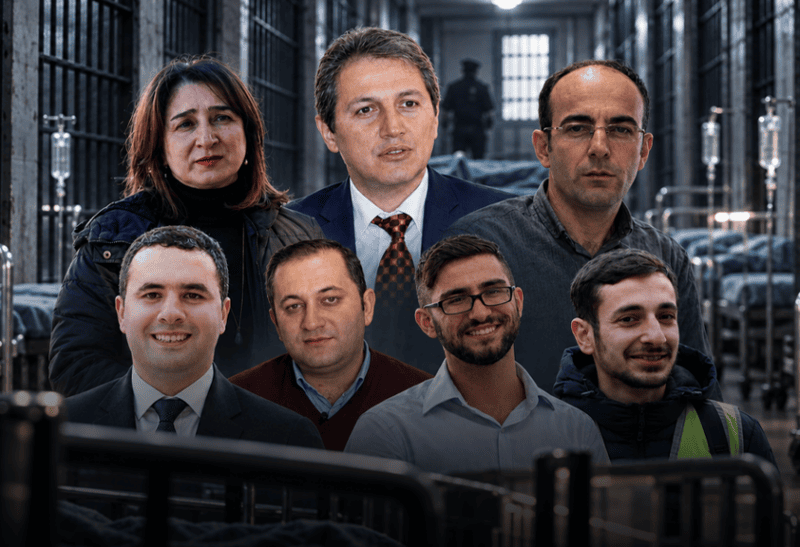
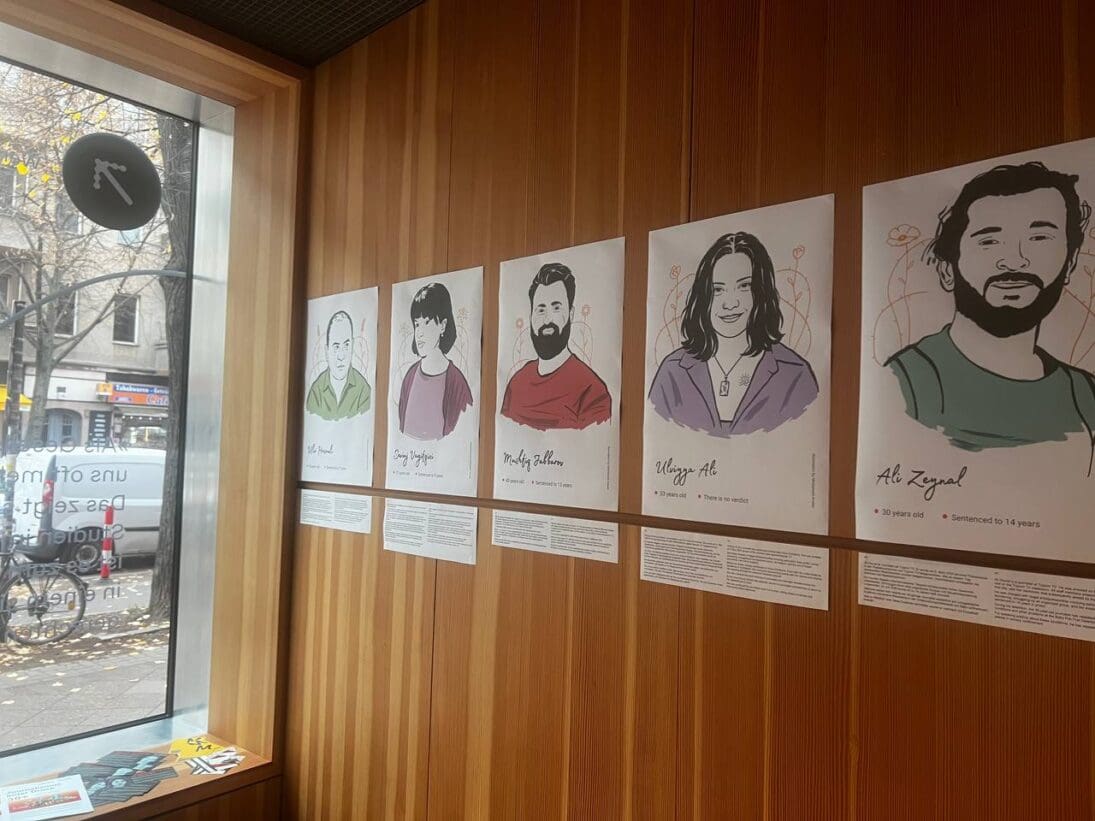
According to her, the exhibition features portraits of 10 people representing more than 30 journalists currently behind bars. The journalists portrayed are employees of Meydan TV, Toplum TV and Abzas Media.
Visitors can learn about the journalists’ work, the reasons for their arrests and the charges brought against them.
The exhibition also provides information about the criminal cases involving Meydan TV, Abzas Media and Toplum TV, the number of employees arrested from each newsroom, as well as journalists from other media organizations.
Letters written to journalists will be handed to them after their release
Visitors to the exhibition can also write letters to the imprisoned journalists. Postcards in various designs have been prepared for this purpose.
According to Fatima Karimova, the organisers plan to send photographs of the letters to the journalists through their lawyers or family members.
“The original letters will be kept and handed over to the journalists after their release. In this way, we want to offer them moral support and help them feel that they have not been forgotten while in prison,” she said.
The organisers hope that the letters will eventually become part of the journalists’ personal archives.
“Some people find it hard to imagine that 10 people from one newsroom could be arrested at once”
Fatima Karimova said that awareness of the arrests of Azerbaijani journalists varies across Europe.
According to her observations, people who are connected to media and civil society organisations are more familiar with the situation in Azerbaijan. However, many people working outside these fields do not have sufficient information about what is happening.
The investigative journalist said that some people she has spoken to find it difficult to imagine that 10 employees from one newsroom and seven from another could be arrested at the same time in Azerbaijan.
In Karimova’s view, human rights problems in Azerbaijan do not receive sufficient attention at the political level. She attributes this to political agreements and interests.
Nevertheless, the journalist believes that many people in Europe are interested in what is happening in Azerbaijan.
“Some people are simply unaware of the journalists’ arrests because of a lack of information. Events like this give them an opportunity to learn about what is happening. It is important to keep speaking about the situation of journalists in Azerbaijan, sharing their stories and informing the public,” she said.
Through the exhibition and letter-writing event, the organisers aim both to support imprisoned journalists and to keep the issue of their freedom on the international public agenda.
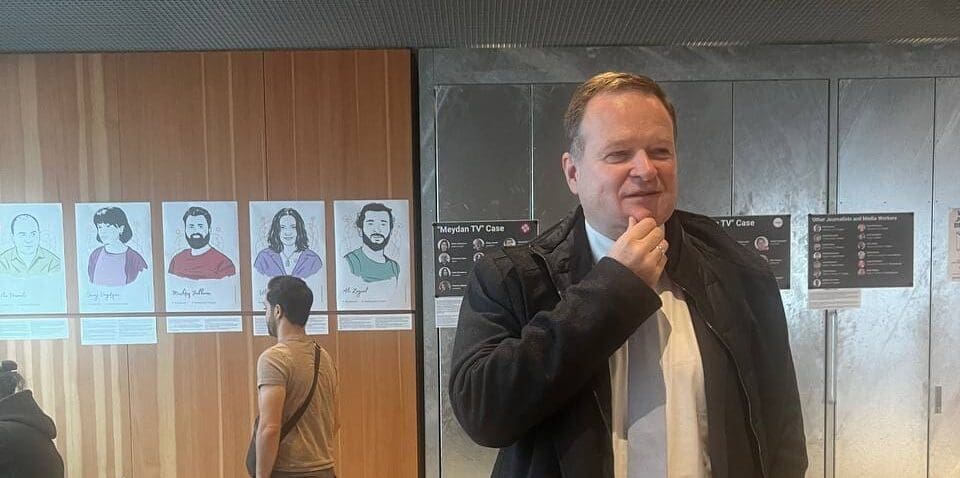
Foreign journalists, politicians and members of the public also attended the event. Among them was Frank Schwabe, a member of the German Bundestag.
Schwabe represents the Social Democratic Party of Germany (SPD) and also chairs the Socialists, Democrats and Greens Group in the Parliamentary Assembly of the Council of Europe. He has been active on human rights issues for many years, including the situation of political prisoners in Azerbaijan.