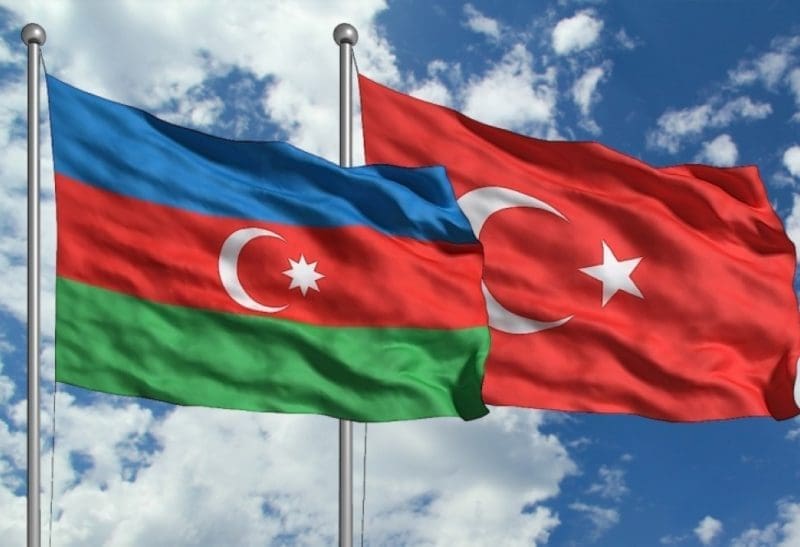
Only a few days remain until the parliamentary elections in Armenia. The election campaign in the country resembles a geopolitical confrontation more than internal political competition.
On one side stands Nikol Pashinyan, who came to power after the 2018 revolution and has been gradually trying to distance the country from Russia in recent years.
On the other side are political forces, church circles, and Russia-linked business groups that believe maintaining close relations with Moscow is important for Armenia’s security and economy.
This confrontation is reflected less in the slogans used during the election campaign and more in the events that have taken place over the past two years.
After Karabakh came under Azerbaijan’s control in 2023, Pashinyan openly accused Russia of failing to fulfill its allied obligations toward Armenia. Following this, Yerevan froze its participation in the Collective Security Treaty Organization (CSTO), expanded the activities of the European Union monitoring mission, and increased cooperation with the United States. Moscow, in turn, viewed these moves as a blow to its position in the South Caucasus.
In recent months, tensions in the relationship have entered a more visible phase.
At the end of May, Russia recalled its ambassador to Armenia for consultations. The Russian Foreign Ministry explained the move by citing the Armenian leadership’s growing rapprochement with the European Union. At the same time, discussions began within the Moscow-led Eurasian Economic Union regarding Armenia’s future in the bloc. Union officials demanded that Yerevan choose between the European Union and the Eurasian Economic Union, and even raised the possibility of suspending Armenia’s membership.
The Pashinyan government, however, stated that it does not accept such a choice.
A few years ago, debates over Armenia’s foreign policy direction were largely confined to expert circles; today, they are at the heart of the election campaign.
For Moscow, that is not enough.
At the beginning of June, Russia’s agricultural watchdog banned the import of Armenian apricots, peaches, nectarines, cherries, grapes, and other products. Prior to this, Armenian mineral water, alcoholic beverages, fish products, strawberries, tomatoes, and various other agricultural goods had also faced different restrictions. Russia is one of Armenia’s main export markets. For this reason, these measures are viewed in Yerevan less as technical inspections and more as a political signal.
Russia is also venturing into more sensitive territory.
Moscow has stated that if Armenia continues its integration with the European Union, preferential arrangements for the supply of discounted natural gas, oil, and diamonds could be withdrawn. Armenia imports more than 80 percent of its natural gas from Russia and obtains these energy resources at prices lower than those on European markets.
As a result, economic pressure has emerged as one of the main instruments Moscow is using during the election campaign.
However, Pashinyan’s challenges are not coming only from abroad.
Over the past year, two important political factors have come to the forefront within Armenia: the Apostolic Church and the Russian-Armenian billionaire Samvel Karapetyan.
Karapetyan is a businessman operating in Russia and one of the wealthiest Armenians listed in Forbes. In the summer of 2025, he accused the government of conducting a campaign against the church and stated that if politicians did not resolve the issue, they would “intervene in their own way.” The Armenian authorities interpreted these statements as a call to seize power by force, and Karapetyan was arrested.
Interestingly, Karapetyan’s arrest drew more attention for Moscow’s reaction than for the response within Armenia itself.
The Kremlin stated that Karapetyan is a Russian citizen and that his case is being closely monitored. Members of the Russian parliament and politicians close to the Kremlin strongly criticized the arrest. The Armenian Ministry of Foreign Affairs, in turn, sent a note to Moscow, describing the statements by Russian politicians as interference in the country’s internal affairs.
Thus, the Karapetyan case ceased to be merely the arrest of an oligarch and became a new point of tension in Armenia–Russia relations.
A new opposition to Pashinyan: the church and the oligarchy
One of the most notable features of the election campaign in Armenia is that the opposition is emerging not from traditional political parties, but from the church and business circles.
In 2024, after the decision to return four villages as part of the border delimitation with Azerbaijan in the Tavush region, Archbishop Bagrat Galstanyan, the head of the Tavush diocese, became the face of anti-government protests. Marches involving thousands of people extended all the way to Yerevan, and the “Holy Struggle” movement was formed.

Galstanyan’s main argument was that after Karabakh, Pashinyan is making new concessions under pressure from Azerbaijan and is weakening Armenia’s security.
A year later, the events moved into a more intense stage.
In June 2025, the Armenian Investigative Committee announced that the group led by Galstanyan was preparing to seize power by force. Law enforcement agencies conducted searches at more than 90 locations, and 14 people were arrested. According to the investigation, the searches uncovered weapons, communication devices, drones, smoke grenades, and lists of a post–regime-change government.
The opposition called it political persecution.
The authorities, however, stated that it was the prevention of a coup d’état.
This confrontation shows how polarized Armenia has become as it heads toward elections.
Billionaire Samvel Karapetyan entered the political scene at exactly that time. Although Karapetyan had long been known for his business activities in Russia, in the past two years he has begun to take an open political stance. He criticizes Pashinyan’s policies and describes the government’s confrontation with the church as a threat to Armenian statehood.
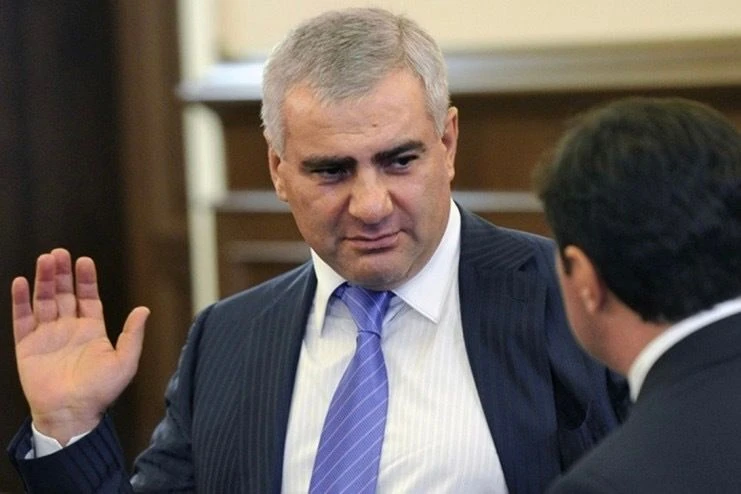
The “Strong Armenia” bloc led by Karapetyan has become one of the main opposition centers in the election campaign. In recent polls conducted in recent months, this bloc appears in second place. According to an EVN Report poll in May, Pashinyan’s “Civil Contract” party has 56.4 percent support, while Karapetyan’s bloc has 17.5 percent. In February polls, Karapetyan’s figure was around 19 percent.
These figures reveal an important detail.
Although Pashinyan’s approval rating has weakened compared to previous years, the opposition has still not been able to unite around a single candidate or a single political center.
Who is standing against Pashinyan in this election?
Nineteen parties and two blocs are taking part in Armenia’s June 7 elections. However, the real political competition is taking place between a few main forces.
The first and main contender is, of course, the ruling “Civil Contract” party led by Nikol Pashinyan. In most polls, this party appears in first place and is considered the favorite to win the election.
However, there is no unified opposition against Pashinyan.
On the contrary, the opposition camp is divided into several centers.
One of the biggest rivals is the “Hayastan” (“Armenia”) bloc led by Armenia’s second president, Robert Kocharyan.
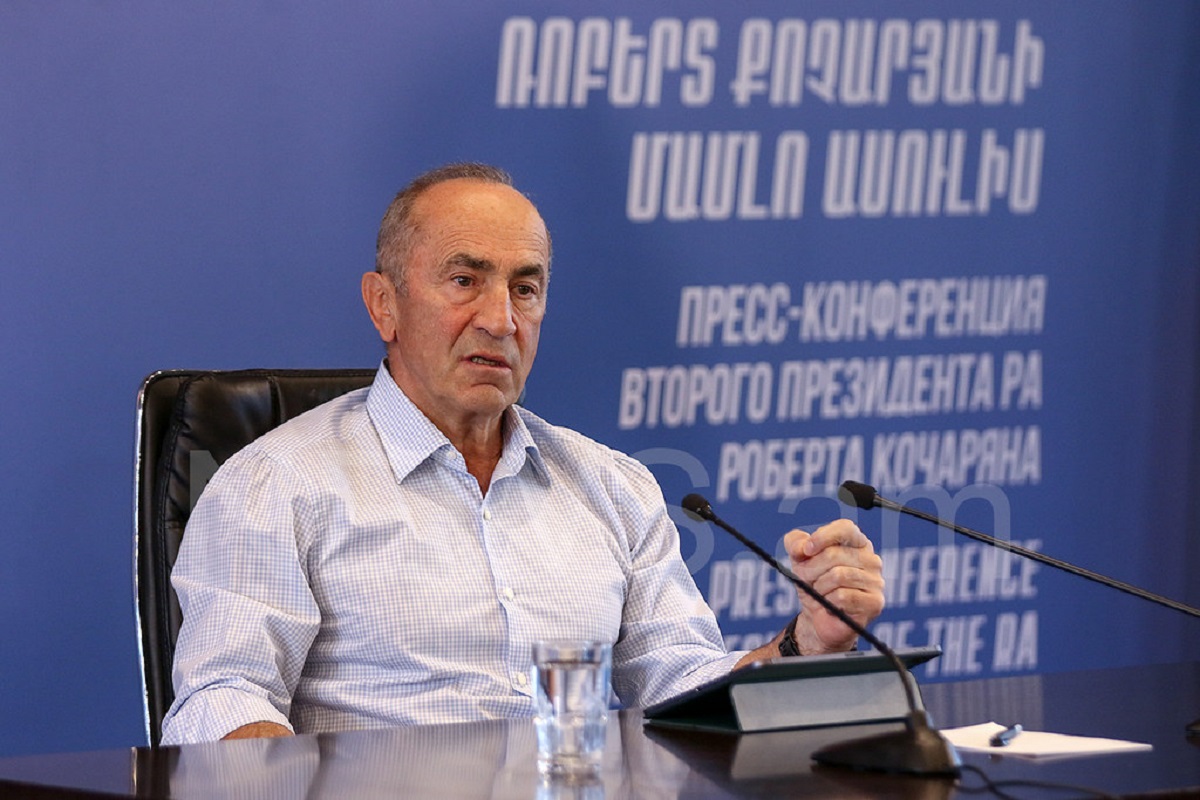
Kocharyan served as President of Armenia from 1998 to 2008 and is one of the most prominent figures of the political elite that emerged from Karabakh. His bloc considers Armenia’s distancing from Russia dangerous and advocates restoring a strategic partnership with Moscow.
Another major center of the opposition is the “Strong Armenia” bloc formed around Russian-Armenian billionaire Samvel Karapetyan. In many current polls, Karapetyan’s bloc is shown in second place and is considered Pashinyan’s main rival.
The third important player is the “Prosperous Armenia” party led by businessman Gagik Tsarukyan.
Tsarukyan has been one of the key figures in Armenian politics for many years. He is neither as openly pro-Western as Pashinyan nor as openly pro-Russian as Kocharyan. For this reason, his role could be significant in potential post-election coalitions.
In addition, forces such as “Wings of Unity” led by former ombudsman Arman Tatoyan, “Bright Armenia” led by former Foreign Minister Edmon Marukyan, and “New Power” led by former Yerevan mayor Hayk Marutyan are also participating in the election.
But one of the key questions concerns the fate of the former presidents.
Kocharyan is there, but Sargsyan is not
One of the most notable aspects of the election is that former President Robert Kocharyan is personally taking part in the race.
However, Armenia’s third president, Serzh Sargsyan, and the Republican Party he leads are not participating in the elections. Sargsyan announced in April 2026 that his party would not take part in the election.
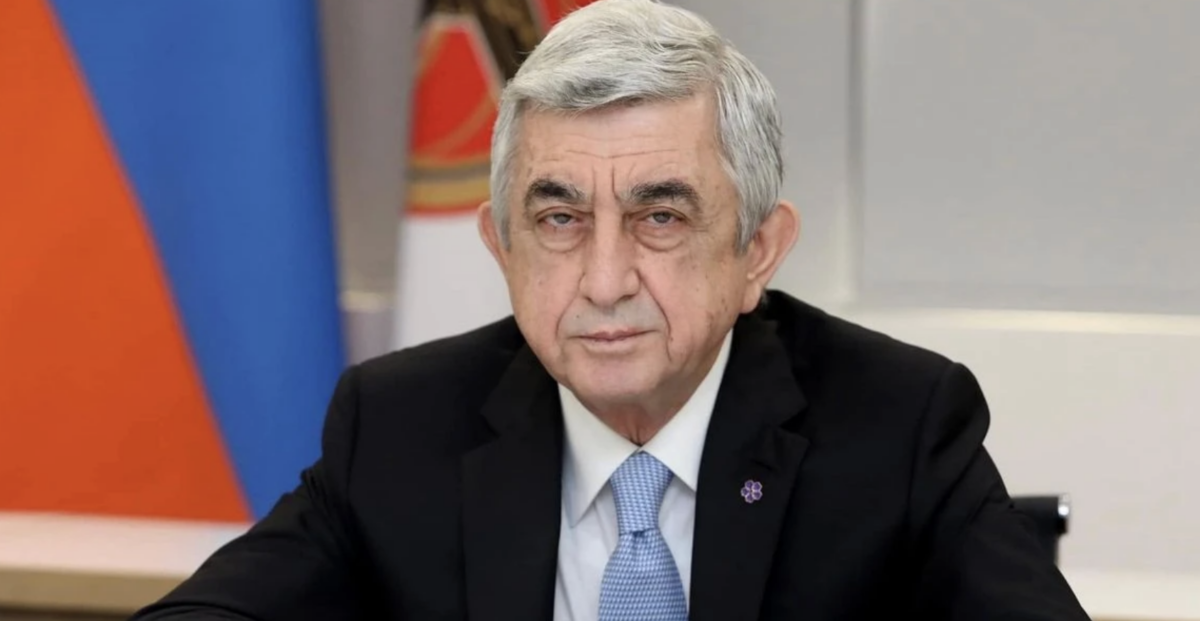
There are several explanations behind this decision.
First, the Republican Party’s approval rating has sharply declined in recent years.
Second, there is concern about the fragmentation of votes within the opposition camp.
Third, a widely held view in Armenian media and expert circles is that part of Sargsyan’s camp is effectively leaning toward Karapetyan’s project. There is no clear evidence of this, but the fact that some members of Karapetyan’s team previously had ties to the Republican Party has intensified these discussions.
Thus, a paradoxical situation has emerged.
The “old system,” which was the main target of the 2018 revolution that brought Pashinyan to power, is returning in this election in two different forms: on one side, the traditional opposition led by Kocharyan; on the other, a new political project formed around Karapetyan that is financially stronger and has closer ties to Moscow.
And one of the main intrigues of the election is this: will Pashinyan’s main rival be former President Kocharyan, or Karapetyan’s political camp, which has risen rapidly over the past year?
What do the polls say: is Pashinyan really the leader?
One of the biggest paradoxes in Armenian politics is that Pashinyan remains both the most criticized and the most popular politician. The loss of Karabakh, economic problems, and security concerns have dealt a serious blow to his approval ratings. However, this blow has not been enough for the opposition to come to power.
According to recent data, the ruling “Civil Contract” party has around 30 percent support and is still in first place.
In some polls, this figure appears even higher.
In a Breavis poll conducted in February, Pashinyan’s party received 50 percent support, while Karapetyan was shown in second place with 19 percent.
A March survey by the International Republican Institute (IRI) revealed another point.
The poll showed that for a significant portion of Armenians, the main priority is no longer security, but the economy and stability. A large share of respondents supports integration with the European Union.
This also becomes Pashinyan’s main political advantage.
The opposition is running its campaign on the issues of Karabakh and national security.
Pashinyan, on the other hand, poses a different question to voters: Do you want to return to the past, or continue the new foreign policy course?
For this reason, the election is not just a contest between the government and the opposition, but a competition between two different models of Armenia.
Why doesn’t Moscow want Pashinyan to win?
One of the most important aspects of this election is Russia’s position.
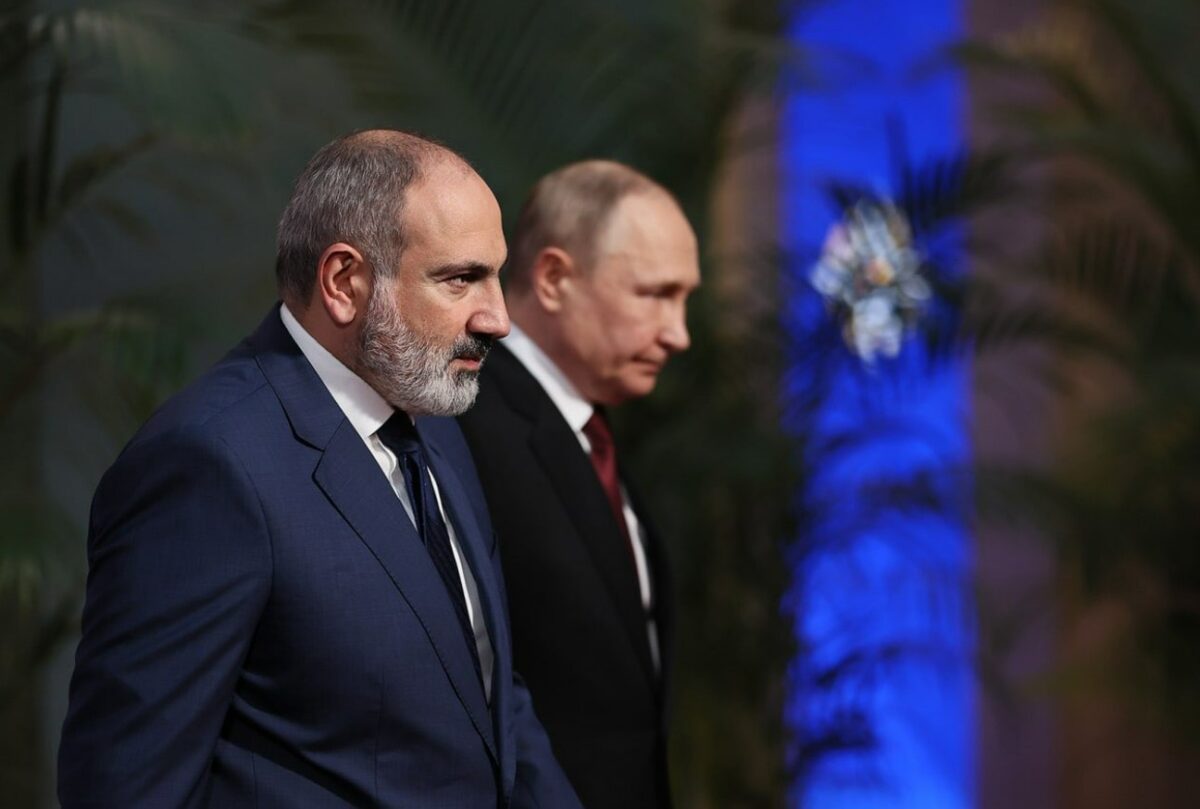
Moscow’s problem with Pashinyan began after the loss of Karabakh. After 2023, Armenia suspended its participation in the Collective Security Treaty Organization (CSTO). The functions of Russian border guards were reduced. Arms purchases began from countries such as France, India, and others. Relations with the United States and the European Union were rapidly expanded. In January 2025, Armenia and the United States signed a strategic partnership charter. This document elevated cooperation between Washington and Yerevan in the fields of security, economy, and institutional reforms to a new level. In 2026, the European Union allocated an additional €20 million aid package under the European Peace Facility to support the Armenian army. In Washington, a trilateral document was signed with the participation of U.S. President Donald Trump and President of Azerbaijan Ilham Aliyev.
Moscow views all of this as a weakening of its positions in the South Caucasus.
According to experts, the Kremlin fears that if Pashinyan is re-elected, Armenia’s integration into the European Union will accelerate. For this reason, Russia has both activated economic pressure tools and is closely monitoring the rise of alternative figures such as Karapetyan.
Some media outlets, citing Western intelligence sources, even report that Moscow is attempting to influence the election by using disinformation campaigns and various political projects. The Kremlin denies this.
At this point, it is no longer just about Pashinyan.
It is about Russia’s fear of losing an ally in the South Caucasus.
Why does Azerbaijan appear interested in Pashinyan staying in power?
Official Baku has not so far publicly declared support for any candidate or party in Armenia’s elections. The Azerbaijani authorities traditionally state that they do not interfere in the internal politics of other countries.
However, events in recent years show that for Baku, the main issue is not which specific individual is in power in Armenia, but rather the existence of a government that will continue peace negotiations and will not reverse the agreements that have been reached.
It was precisely under Pashinyan that, starting in 2022, commissions on border delimitation were established.
In 2024, the first real border delimitation between Azerbaijan and Armenia was carried out in the Tavush direction, and Armenia returned four villages that had belonged to Azerbaijan.
It was also during Pashinyan’s tenure that Armenia, for the first time, openly recognized Karabakh as part of Azerbaijan’s territory.
In October 2023, in a document adopted in the city of Granada, Spain, Armenia confirmed that it recognizes Azerbaijan’s territorial integrity of 86,600 square kilometers.
This marked a significant departure from the political line that Armenia’s previous governments had defended for decades.
This is also what underlies the increasingly favorable perception of Pashinyan in Baku.
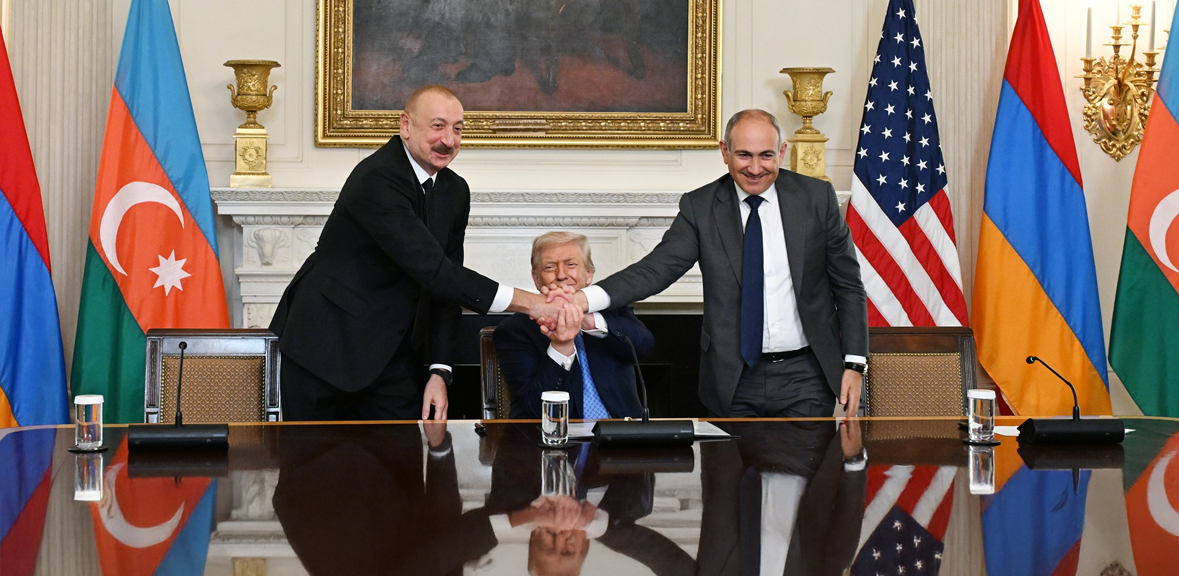
For the Azerbaijani authorities, Pashinyan is not a “friendly politician.”
In this context, one notable point is the shift in Azerbaijan’s rhetoric toward Armenia’s leadership. During the 2020 war and the months that followed, Azerbaijani President Ilham Aliyev used extremely harsh and mocking language toward Nikol Pashinyan. In his speeches, expressions such as “What happened, Pashinyan?”, “Didn’t you say you wouldn’t give it up?”, “You were building a road from Jabrayil to Yerevan. What happened, Pashinyan?”, and “You were dancing in Shusha” were used. Terms like “heel-licker” and “dog chaser” were also employed, making Pashinyan one of the main targets of personal criticism and political ridicule.
This rhetoric was part of the open confrontation between Baku and Yerevan at that time as well as the narrative of military victory. However in the following years especially after Azerbaijan re-established full control over Karabakh and peace negotiations became the main focus of the agenda this tone has changed significantly. Today the Azerbaijani authorities view Pashinyan more as a party to the ongoing negotiation process and personal mockery in official rhetoric has decreased considerably compared to the previous period. He is seen as a leader who conducts talks with Baku makes compromises and most importantly is able to implement the decisions he makes.
The alternatives appear more uncertain.
Robert Kocharyan and the forces representing his political line have long taken a tougher stance on the Karabakh issue.
The opposition formed around the church is demanding the cancellation of the Tavush delimitation and a change in the policy toward Azerbaijan.
For this reason, the main risk for Baku is not Pashinyan’s departure.
The main risk is that the government that replaces him may question the agreements reached so far.
The Pashinyan phenomenon in Azerbaijani media
An interesting trend has emerged in Azerbaijani media over the past two years.
Whereas Armenian leaders, including Pashinyan, were previously mainly the subject of criticism and ridicule, some media outlets have now begun publishing more neutral and, at times, even positive coverage of Pashinyan.
This change has become particularly noticeable since Karabakh came under Azerbaijan’s control.
A number of Azerbaijani commentators portray Pashinyan as the first politician in Armenia’s history to accept reality.
Their argument is as follows:
If Armenia recognizes Azerbaijan’s territorial integrity, agrees to border delimitation, and is willing to discuss a peace treaty, this creates a more favorable situation for Azerbaijan than under previous governments.
However, this approach also has a reverse effect within Armenia.
The opposition often portrays Pashinyan as “the politician Baku wants.”
During the election campaign, opponents of the government have repeatedly pointed to positive coverage of Pashinyan in Azerbaijani media as evidence that he has drifted away from Armenia’s national interests.
Thus, the growing positive tone toward Pashinyan in Azerbaijani media produces a paradoxical effect.
These reports may be seen in Baku as evidence of the success of Pashinyan’s political course.
However, within Armenia, they sometimes have the opposite effect, becoming an argument used by the opposition against the government.
For this reason, it is difficult to argue that the positive image of Pashinyan emerging in Azerbaijan’s information space brings him any real political benefit.
In some cases, the opposite effect may be even stronger.
Do the U.S. and Europe want Pashinyan to stay?
If Russia views these elections as a process that will determine Armenia’s geopolitical orientation, a similar perspective also exists in Western capitals.
The difference, however, is that Washington and Brussels have expanded their cooperation with Armenia to an unprecedented level over the past two years.
In April 2024, a high-level trilateral meeting between Armenia, the United States, and the European Union was held in Brussels. Following the meeting, economic and technical assistance packages worth hundreds of millions of euros were announced for Armenia. In 2025, the United States and Armenia signed a Strategic Partnership Charter. The European Union, meanwhile, expanded its support for Armenia’s border security, public administration, and defense sector. Taken together, these steps send a clear message: the West is interested in seeing the course pursued by Pashinyan continue.
The reason for this is not personal sympathy toward Pashinyan.
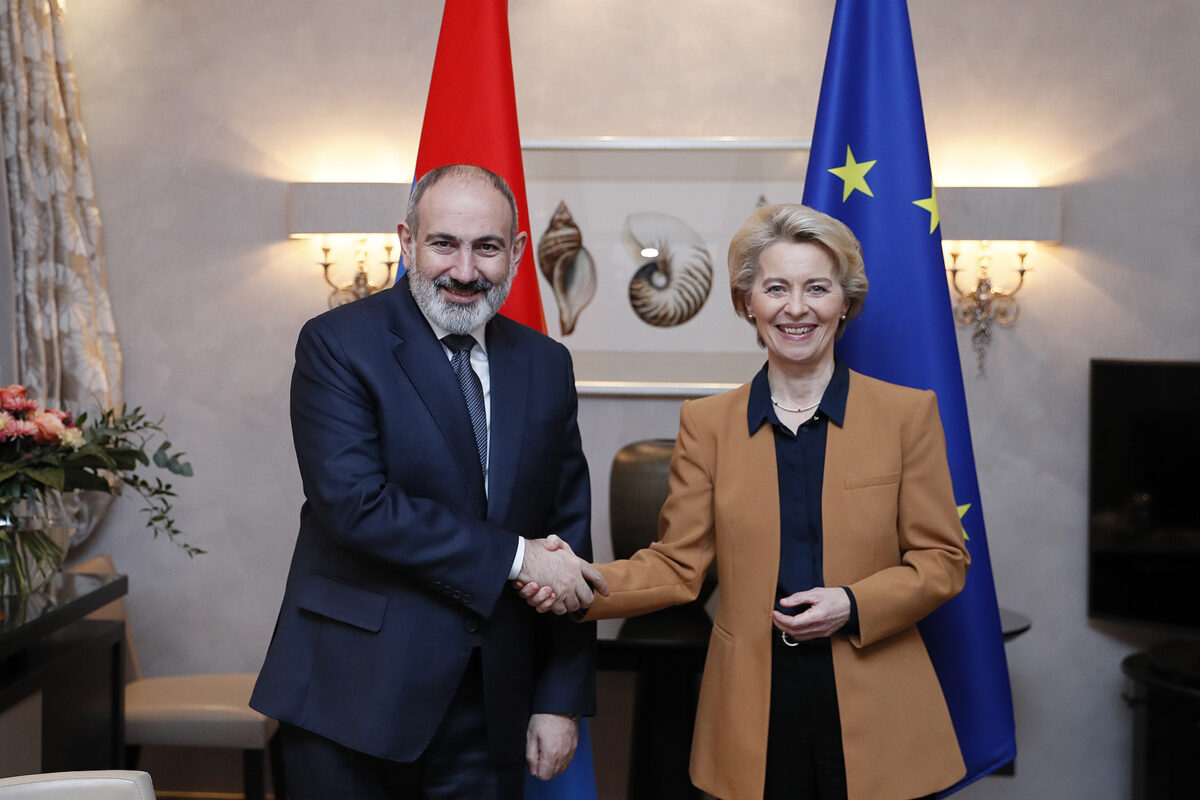
The key issue is Armenia’s shift away from Russia’s sphere of influence toward closer integration with the West. If the government changes after the election and a new administration attempts to restore relations with Moscow, the cooperation model built over the past two years could suffer a serious setback. For this reason, the main question for Brussels and Washington is not Pashinyan’s fate. The central question is whether Armenia’s foreign policy course will change.
If Pashinyan loses, what happens to the peace process?
The outcome of this election could have the greatest impact on the ongoing peace process between Baku and Yerevan.
It is currently reported that a large part of the text of a peace agreement between the sides has already been agreed.
However, a number of fundamental issues still remain unresolved.
The issue raised by Baku regarding territorial claims in Armenia’s Constitution is one of these unresolved matters. In recent months, Pashinyan has repeatedly spoken about the need for a new constitution, which is seen as a positive signal in Baku.
However, a large part of the opposition is against such changes.
The Kocharyan camp, the church movement, and representatives of the radical opposition consider Pashinyan’s policy toward Azerbaijan to be contrary to national interests.
This means that if a change of government occurs, peace negotiations may not automatically stop, but their pace and direction could change.
At least some of the agreements reached over the past three years could become subject to renegotiation.
For this reason, the outcome of the election will not only determine Armenia’s internal political balance.
It will also affect security in the South Caucasus in the coming years.
The real question of the election
A few years ago, elections in Armenia were mainly framed as a struggle between the former and the new ruling elites.
This time, the situation is different.
This election is no longer just about Nikol Pashinyan’s political fate. It has the character of a referendum on the direction Armenia will take.
On one side stands a model of Armenia moving closer to the European Union, building a strategic partnership with the United States, and attempting to distance itself from Russia.
On the other side are forces advocating the preservation of traditional security and economic ties with Moscow.
For this reason, the main issue in the campaign is not economic programs or social promises.
The central debate is Armenia’s future geopolitical identity.
Russia’s economic pressure, the opposition formed around Karapetyan and the church, the West’s increasing support for Yerevan, and Azerbaijan’s close attention to the process are all different parts of the same picture.
In short, on election day Armenians will not only choose a new parliament. They will also decide the direction in which Armenia will move from here.