In recent days, a notable surge in diplomatic activity has been observed between Baku and Moscow. The agreement between the parties regarding compensation for the AZAL aircraft crash in Aktau, followed by a joint meeting of the intergovernmental commission and messages concerning economic cooperation, creates an impression of normalizing relations between the two countries.
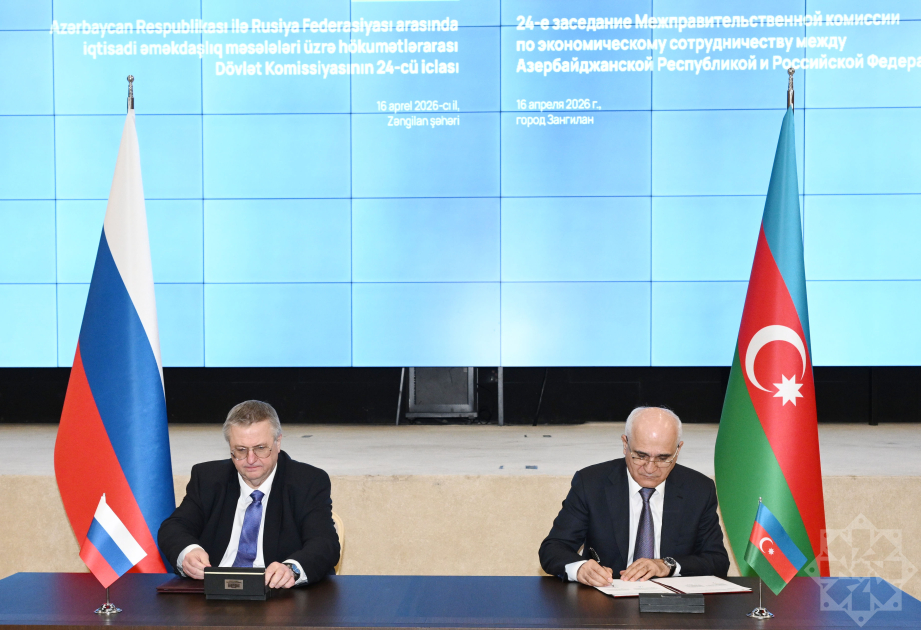
The easing observed in Russia–Azerbaijan relations presents a contradictory picture at first glance. On one hand, the AZAL plane crash in December 2024, which resulted in 38 deaths, triggered serious political tension, accompanied by mutual accusations and harsh statements. Baku officially accused Russia of responsibility, demanding compensation and the punishment of those at fault. Against this backdrop, operations against the Azerbaijani diaspora in Russia and the detention of Russian citizens in Baku, including employees of Sputnik Azerbaijan, further sharpened the conflict. These events brought relations to their most strained phase in the last 30 years.However, the figures cited by Deputy Prime Minister Shahin Mustafayev during the Azerbaijan–Russia Intergovernmental Commission meeting held in Baku on April 16 reinforce the impression that the tension is now in the past. The Deputy Prime Minister stated that the total volume of Russian investment in the Azerbaijani economy exceeds $10.7 billion, while trade turnover reached $4.9 billion in 2025. Statements regarding the “development of cooperation” made during Russian Deputy Prime Minister Alexei Overchuk’s visit to Baku, as well as Azerbaijani officials’ return to the rhetoric of “good neighborliness and strategic partnership,” signal that the tension has been left behind.
These two parallel lines, represented by the tension of the recent past and the current messages of normalization, raise a new question:
Is this rapprochement between Baku and Moscow truly an indicator of deepening strategic cooperation, or is it a forced political maneuver dictated by regional and global conditions?
At first glance, the primary cause of the crisis appeared to be the AZAL plane crash and the resulting diplomatic confrontation. However, the issue is not limited to this incident. The aircraft crisis acted as a catalyst that exposed pre-existing grievances between the parties.
In recent years, the new geopolitical reality formed after Karabakh (characterized by the active participation of the EU and later the US in peace talks between Azerbaijan and Armenia) has weakened Moscow’s traditional mechanisms of influence in the South Caucasus. Compared to previous periods, Baku is attempting to keep the “Russia factor” at a distance, while Moscow interprets this as a narrowing of its sphere of influence.
Events amidst tension: Mutual pressure tools
Over the past year, tension between Baku and Moscow was not limited to diplomatic statements. Both sides have simultaneously activated various instruments of pressure against each other in the informational, legal, and security spheres.
In January 2025, the controversy surrounding the “Russian House” in Baku, known as the “Rossotrudnichestvo” representation, became one of the first open episodes of this line of events. After pro-government media linked the entity to “intelligence activities,” the Azerbaijani Ministry of Foreign Affairs effectively suspended its operations, citing a lack of legal registration. Subsequently, the Rossotrudnichestvo office officially announced the suspension of its activities. Moscow labeled this move a “mistake” and sought to resolve it through political dialogue. The mutual summoning of ambassadors and the issuing of diplomatic notes indicated that the incident was not merely legal in nature, but had taken on the character of an open diplomatic confrontation.
During the same period, the confrontation in the information space intensified. In February 2025, the Azerbaijani Ministry of Foreign Affairs revoked the accreditation of Sputnik Azerbaijan. On June 30, the Ministry of Internal Affairs conducted a raid on the agency’s Baku office, detaining seven people, including editor-in-chief Igor Kartavykh and Evgeny Belousov. While the official reason was “illegal financing and unaccredited activity,” pro-government media alleged the detainees were linked to the Russian Federal Security Service (FSB). Moscow characterized the move as political and demanded their release. The individuals were eventually released and returned to Russia.
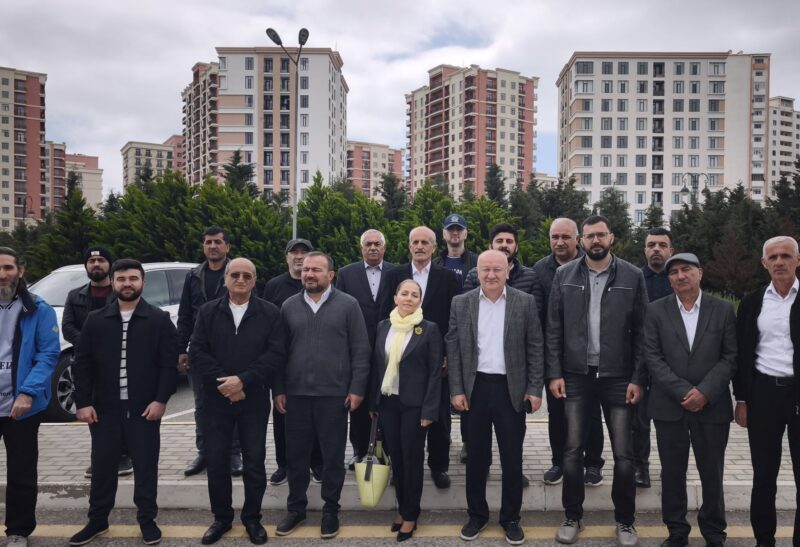
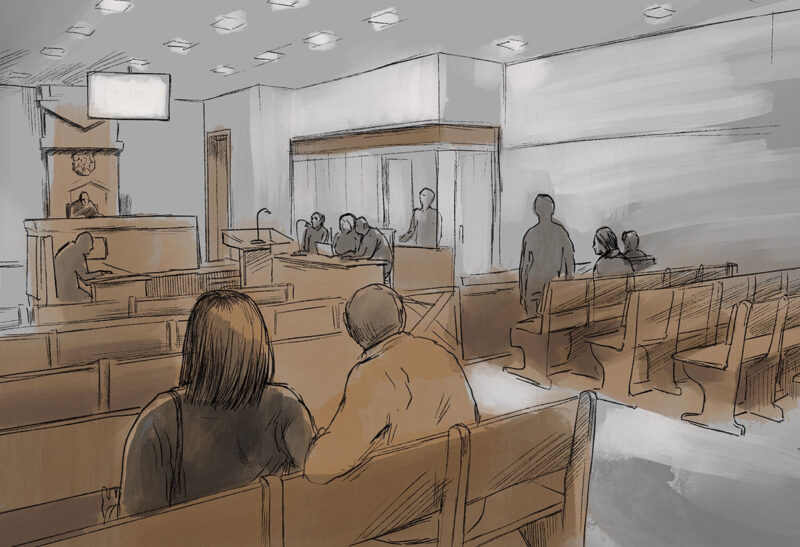
Amidst these events, episodes of violence against Azerbaijanis in Russia increased. The killing of two Azerbaijanis during a police operation in Yekaterinburg in June 2025 was labeled a “demonstrative murder” by Baku, and Azerbaijan’s Prosecutor General’s Office opened a criminal case. The harsh official reaction from Baku further escalated tensions. Additionally, on April 13 of this year, the sentencing of diaspora representative Shahin Shikhlinksi to 24 years and his son Mutvali to 8 years highlights the severe penalties being applied to diaspora members in Russia.
On the domestic political front, the framing of the “Russia factor” as a security threat is noteworthy. The October 2025 criminal case against Ramiz Mehdiyev, who was a long-time key figure in the government, was a symbolic step involving charges of high treason and attempting to seize power. His presentation in the media and political discourse as a representative of “Russia’s influence network in Azerbaijan” highlighted the case as both a legal and a political message.
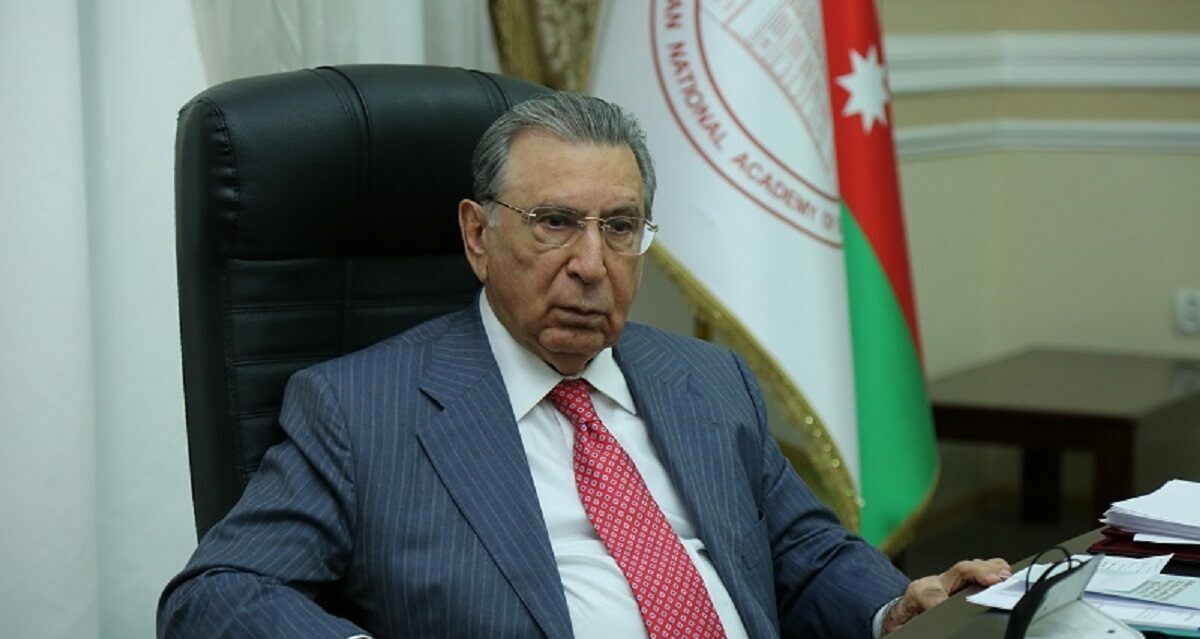
The arrests of Ali Karimli, chairman of the Azerbaijan Popular Front Party (the country’s main opposition party), and other party functionaries within the same framework showed that the “Russian connection” accusation was being used in a broader political context. This can be viewed as the intersection of a domestic pressure tool against the opposition and a foreign policy line.
In this context, the pressure on the Azerbaijani diaspora in Russia, the restriction of pro-Russian structures in Baku, and domestic arrests based on “Russian ties” emerge as elements of a mutual show of force. Therefore, the tension should be understood not just as a diplomatic incident, but as a result of a shifting balance of power and a struggle for influence.
Russia’s tools of influence: From hard power to soft influence
One of Russia’s most significant tools of influence is the economy. For years, Russia has remained one of Azerbaijan’s primary trade partners. Recent official data shows trade turnover measured in billions, with Russian investments exceeding $10 billion. This indicates Moscow maintains influence through economic levers.
Additionally, the migration factor is a vital socio-economic tool. Tens of thousands of Azerbaijanis work in Russia and support their families with remittances. This dependence could potentially serve as an informal pressure mechanism for Moscow. The harsh treatment of diaspora members following the Yekaterinburg events clearly demonstrated how this tool can be utilized.
Humanitarian and cultural influence is also significant. The Russian-language education sector remains extensive in Azerbaijan, and the language is still actively used in urban environments and among the elite, providing Russia with long-term “soft power.”
Reasons for rapprochement: Geopolitical and regional context
The recent normalization between Baku and Moscow is not explained solely by internal dynamics. It is shaped by broader regional and global geopolitical shifts.
Firstly, the new balance of power in the South Caucasus is prominent. The end of the Karabakh conflict has limited Moscow’s traditional influence. Russia can no longer fully act as the region’s primary security guarantor, leading it to act more cautiously with Baku.
Simultaneously, the transformation of the “Armenia factor” is shifting this balance. Yerevan’s gradual distancing from Russia and steps toward Western integration are weakening Moscow’s foothold in the region. In this environment, Azerbaijan becomes a more crucial partner for Russia—at least for maintaining its regional influence.
At the global level, Russia’s increasing isolation due to the war in Ukraine plays a major role. In a confrontation with the West, maintaining stable and pragmatic relations in neighboring regions has become a priority for Moscow. This is particularly significant in terms of transport, logistics, and alternative economic connections. In this context, Azerbaijan serves as an important transit and partner country both geographically and politically.
On the other hand, Azerbaijan is also seeking to continue its policy of balance. While Baku expands cooperation with Western institutions and Turkey, it avoids pushing relations with Russia to the point of extreme confrontation. This appears to be a risk management strategy for security and economic stability.
Transport corridors and regional projects also compel cooperation. Initiatives like the North–South Transport Corridor are strategically important for both, representing rare areas where mutual interests align.
Thus, the current rapprochement looks more like an attempt by both sides to adapt to changing geopolitical realities. This suggests that the softening of relations is a pragmatic compromise born of external pressures rather than a deep strategic transformation.
Moscow’s recent steps appear to be driven more by necessity than by choice
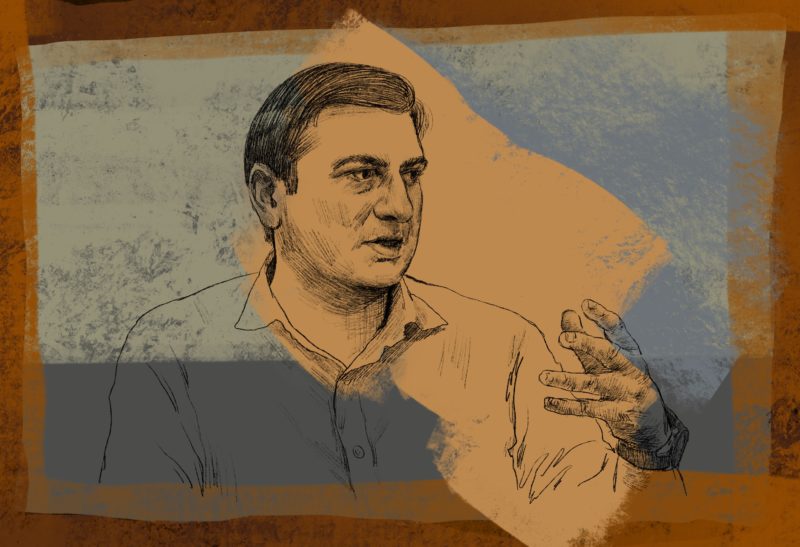
Speaking to Meydan TV, political commentator Elkhan Shahinoglu notes that Russia’s narrowing room for maneuver due to the war in Ukraine makes normalizing relations with Baku a necessity:
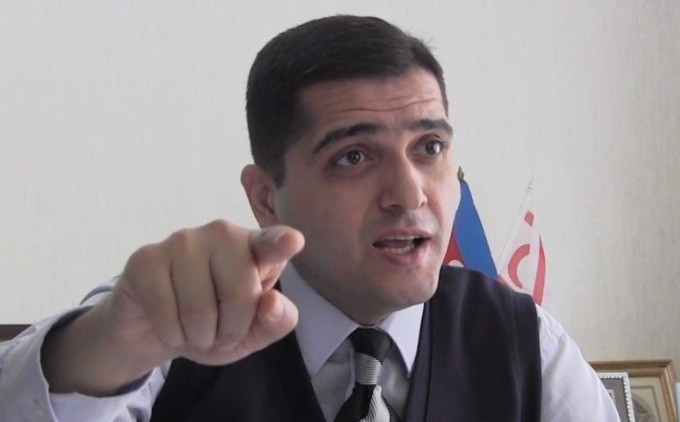
“It seems the Russian leadership is concluding that, given the sanctions resulting from its war against Ukraine and its limited access to global markets, it is not in Russia’s interest to lose a key South Caucasus state like Azerbaijan. Escalating tension does not serve Russia’s interests.”
According to him, in this context, moving toward a resolution regarding the compensation for the AZAL aircraft crash can be evaluated as a pragmatic step by Moscow. Shahinoglu also notes that Russia’s growing interests in the region, particularly its plans regarding transportation projects, further increase the necessity of stabilizing relations with Baku.
“It is possible that Russia also wants to take a more active role in the construction and operation of transport routes.”
At the same time, he emphasizes that normalization is not yet complete and that mutual problems persist:
“This does not mean that all issues on the political level have been fully resolved. Pressure against Azerbaijanis in Russia still continues, there are our compatriots in prison, and there have even been cases of innocent people being killed.”

Former diplomat Nahid Jafarov explains the dynamics of the relationship not only through the Moscow–Baku axis but through the prism of a broader balance of power. In his view, Azerbaijan’s shift toward alternative foreign policy directions played a significant role in the increase of tensions:
“In my opinion, one of the main reasons for the escalation was the development of Azerbaijan-US relations, Trump’s interest in the region, and the emergence of certain projects.”
Jafarov believes subsequent changes in the international situation influenced Baku’s calculations:
“Against the backdrop of the US-Iran confrontation, the decrease in US support for Europe and Ukraine created additional opportunities for Russia, increasing its chances of winning the war. This likely influenced Ilham Aliyev’s calculations: to normalize relations now so that if Russia emerges victorious, Azerbaijan does not become the next target.”
Strategic shift or tactical balancing?
The expert is cautious about directly linking internal processes with the Russian factor. Nahid Jafarov believes that political arrests should instead be explained primarily within the context of domestic affairs and relations with the West:
“I do not think that the tension in Russia–Azerbaijan relations lies at the root of these arrests. The primary reason is Europe’s increasing need for Azerbaijan.”
In his view, the government is attempting to strengthen domestic control under these circumstances:
“Ilham Aliyev is trying to turn this into an opportunity and is seeking to restrict all dissenting forces, the free press, and all independent voices in general within the country.”
The expert also states that while a link exists between the dynamics of Baku–Moscow relations and domestic processes, this connection is not of a direct nature.
In short, relations between Baku and Moscow are neither in a state of full confrontation nor at a stage of stable strategic cooperation. A more realistic picture corresponds to a model of “managed competition.”
The recent normalization steps reflect an attempt by the parties to manage risks rather than the resolution of fundamental contradictions. Elements of cooperation and confrontation exist in parallel: economic ties continue, while at the same time, mutual suspicion remains in the spheres of politics and security.
In this regard, it is difficult to evaluate the current rapprochement as a long-term strategic shift. Rather, it is a tactical compromise chosen by the parties against a backdrop of increasing risks—essentially, a pause extending until the next phase of tension.