On 7 May, hearings on Azerbaijan were held in the Subcommittee on Human Rights of the European Parliament.
Journalist Leyla Mustafayeva and lawyer Samed Rahimli spoke at the hearings. The session took place four months after the European Parliament adopted a resolution in December last year concerning peace activist Bahruz Samadov and ethnic researcher Igbal Abilov.
Free Voices Collective representative and editor-in-chief of the Berlin-based exile media outlet Qazetci, Leyla Mustafayeva, stated that repression in Azerbaijan has intensified further since the European Parliament’s resolution in December last year:
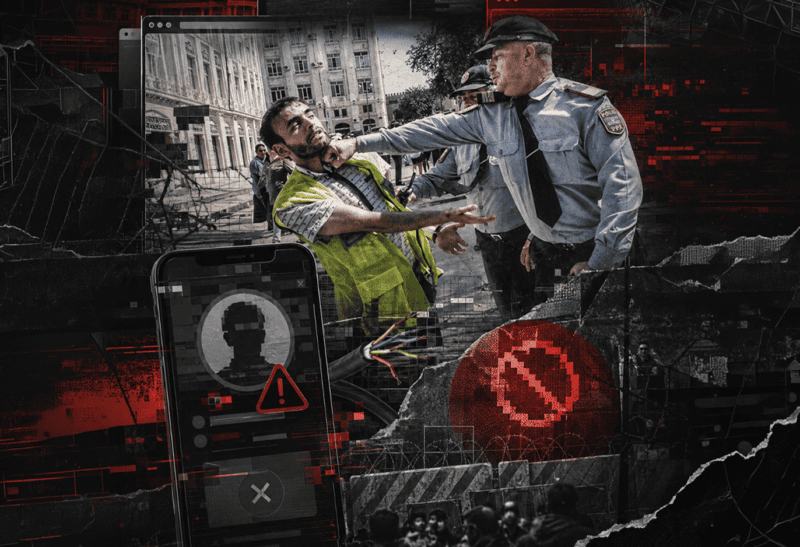
“Since the end of 2023, the Azerbaijani government has launched an unprecedented wave of repression against civil society. The number of political prisoners has reached approximately 400. Despite the European Parliament’s call for the release of researchers Bahruz Samadov and Igbal Abilov, four months have passed and both remain in detention. Samadov has been transferred to a prison with poor safety conditions, and Abilov’s appeal has been rejected.”
The journalist noted that despite €23 million in EU funding allocated for judicial reforms in Azerbaijan, cases of torture, ill-treatment, and denial of medical care continue in Azerbaijani prisons:
“Journalists of Meydan TV Aytaj Tapdig, Khayala Aghayeva, Aysel Umudova and Ulviyya Ali were subjected to sexual harassment while they were in detention. Media lawyer Alasgar Mammadli, investigative journalist Hafiz Babali, and Meydan TV editor-in-chief Aynur Elgunesh urgently need professional medical examination and treatment. Last week, IT specialist Ilgar Aliyev, who had conducted USAID-supported digital security training for independent journalists, was found dead in his cell after being held for more than two years on fabricated drug charges. His death is the latest example of the ongoing unprecedented repression against civil society.”
Leyla Mustafayeva said that the European Union and its member states should make the release of all political prisoners a clear and official condition for any future cooperation with Baku, including under the EU–Azerbaijan Strategic Partnership Agenda.
“The Council of the European Union should consider targeted sanctions against officials credibly implicated in serious human rights violations.”.
The hearings also discussed Azerbaijan’s distancing from the European Parliament and the Euronest Parliamentary Assembly. The participation of exile groups in the Parliamentary Assembly of the Council of Europe (PACE) as representatives of Azerbaijan was also mentioned.
On 1 May, the Milli Majlis adopted a decision to suspend cooperation with the European Parliament in all areas.
According to the decision, Azerbaijan’s participation in the EU–Azerbaijan Parliamentary Cooperation Committee has been suspended. The process of terminating the Azerbaijani delegation’s membership in the Euronest Parliamentary Assembly has also been initiated. Until the process is completed, the Azerbaijani delegation will not participate in Euronest activities.
On the same day, the EU Ambassador to Azerbaijan, Mariyana Kuyuncić, was summoned to the Ministry of Foreign Affairs.
According to the Ministry of Foreign Affairs, during the meeting Azerbaijan protested the resolution adopted by the European Parliament on 30 April and delivered an official note to the EU side.
The ministry stated that the provisions in the resolution regarding the return of Armenian residents to the Karabakh region are considered unfounded and constitute interference in Azerbaijan’s internal affairs.
On 4 May, the President of Azerbaijan Ilham Aliyev, in a video address to the 8th Summit of the “European Political Community” held in Yerevan, Armenia, criticized the European Parliament and the Parliamentary Assembly of the Council of Europe (PACE). According to him, instead of supporting the peace process, the European Parliament is “aiming to sabotage it.” Ilham Aliyev stated that since the end of the Second Karabakh War, from May 2021 to 30 April 2026, the European Parliament adopted 14 resolutions concerning Azerbaijan:
“Imagine, 14 resolutions in five years — this is a kind of obsession.”
He accused the European Parliament of “targeting Azerbaijan” and spreading “slander and lies.”
The President of the European Parliament, Roberta Metsola, responded to Aliyev’s criticism during the same summit, stating that the European Parliament is a democratically elected body and its resolutions are adopted by majority vote:
“These decisions may be uncomfortable for some, but we do not change our working principles.”
Several Members of the European Parliament issued a joint statement criticizing Azerbaijan’s decision to suspend cooperation with the European Parliament. The statement was signed by Chair of the European Parliament’s Committee on Foreign Affairs David McAllister, Chair of the Euronest Parliamentary Assembly delegation Sergey Lagodinsky, Chair of the delegation for relations with the South Caucasus Nils Ušakovs, and the European Parliament’s permanent rapporteur on Azerbaijan Dan Barna.
On 30 April, the European Parliament adopted a resolution on Azerbaijan. The document included calls for the release of imprisoned Armenians in Azerbaijan and for the protection of the rights of Armenians in Karabakh.