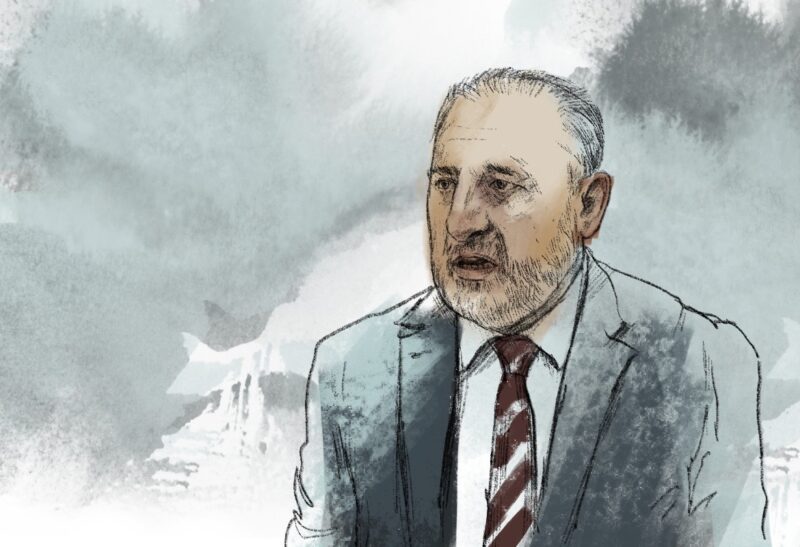
Meydan TV’s imprisoned editor-in-chief Aynur Elgunesh writes from prison:
Azerbaijan has handed over four Armenian prisoners to Armenia. Among them, the most famous in Azerbaijan was Vagif Cherkezi Khachaturyan. He was found guilty under two articles of the Criminal Code, genocide and the deportation or forced displacement of the population. Under these charges, he was sentenced to fifteen years in prison. Witnesses who testified at Khachaturyan’s trial said that he and his group burned people alive. It was also reported that people were taken hostage.
For this reason, the transfer of Armenian prisoners to their country has caused dissatisfaction among many, especially among those who for years strongly supported Ilham Aliyev’s calls for war and revenge. I am not even mentioning the emotional state of those who testified in those trials. There are even those who condemn this step while there are around four hundred political prisoners in the country.
First, let me say that my attitude toward the return of Armenian prisoners to Armenia is positive. As a supporter of peace, I welcome steps taken toward building peace, establishing it, and deepening relations. I believe that both peoples have suffered enough from war, and that in order to rebuild neighborly relations, it is necessary to bury past tragedies in the pages of history and stay away from feelings of revenge. At the very least, this is important so that future generations and young people do not die.
As for the Azerbaijani government calling this a humanitarian step, I do not share this view and I do not agree. This step was taken after Ilham Aliyev’s meeting with representatives of the United States Congress, and its purpose is purely to fulfill the wishes of the United States, especially Trump, who is now shocking the world with his actions. This also serves to prevent potential sanctions and resolutions planned by other international organizations regarding Azerbaijan. Of course, the result is very important, but the intention should not be ignored.
The fact that European and United States institutions approach the issue more from this context causes the Azerbaijani government to view human rights through a prism that benefits itself.
As for other political prisoners, they are people whom Ilham Aliyev personally considers enemies. These people, meaning us, are punished because we are not obedient citizens who act according to the will of the authorities. Here, it is not our beliefs or our civic stance that matters, but our attitude toward the government. For instance, Meydan TV employees have never supported Ilham Aliyev’s war policy. Both then and now, they have been supporters of peace. At the same time, most of the arrested politicians are those who supported Ilham Aliyev’s calls for war, those who stood by him at that time, and even those who participated in the war. This means that it is not our public position but our attitude toward Ilham Aliyev’s rule that plays a role in our imprisonment. In other words, a personal enemy is considered more dangerous than a common enemy.
While I am not naive enough to expect this,I believe that international institutions, particularly the United States, should address matters concerning Azerbaijan strictly through the lens of human rights. Strengthening relations with a country where diversity and freedom of expression do not exist contradicts the values of institutions that challenge the world. A government that does not respect the opinions of its own citizens and does not value them cannot be humanitarian. Humanism either exists or it does not, and it should not change depending on individuals or relationships.
Aynur Elgunesh