In recent days, the social media accounts of several independent media outlets operating outside Azerbaijan, as well as individual journalists, have been subjected to a series of coordinated digital attacks and numerous copyright related complaints.
Following copyright infringement complaints, Meta has blocked the Instagram pages of the independent media outlets “Abzas Media” and “Toplum TV”. Earlier, the Facebook and Instagram pages of “Azadliq Qəzeti,” as well as the Instagram page of “Azerbaijan Saati,” were similarly blocked. “Meydan TV” and “HamamTimes” have also faced similar copyright complaints at various times.
We, Azerbaijani media outlets – “Abzas Media,” “Meydan TV,” “Toplum TV,” “Qəzet.i,” “Mikroskop Media,” “Azadliq Qazeti,” “HamamTimes,” and “Azərbaycan Saatı”, view the numerous copyright complaints filed against the social media accounts of independent media outlets in recent days as a continuation of a broader campaign of pressure and repression aimed at silencing independent media.
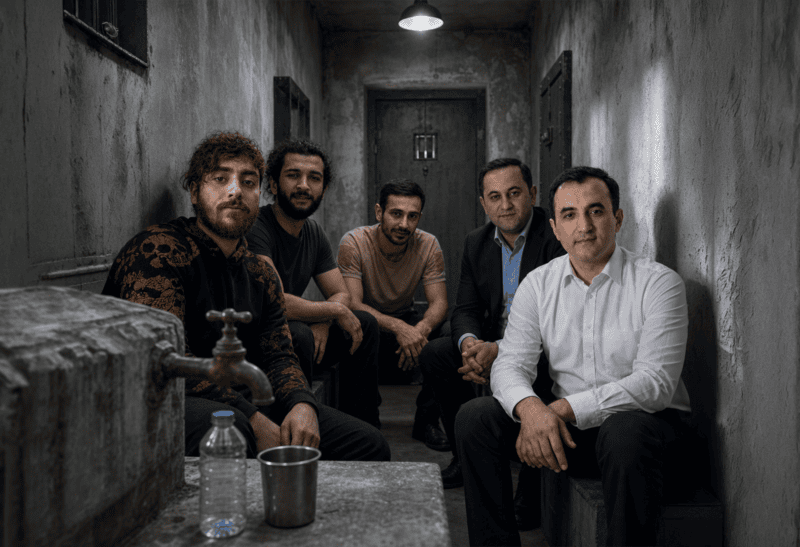
These media outlets have long faced pressure in various forms. Journalists and staff members of our editorial teams have been arrested, subjected to criminal prosecution, forced to leave the country, and our websites have been blocked, while our ability to operate has been restricted. Currently, more than 25 journalists, including staff members of the aforementioned media outlets, are in detention in Azerbaijan.
We believe that this latest method of exerting pressure on independent media representatives is not a chain of isolated incidents, but a direct continuation of the wave of repression initiated by the Azerbaijani government in 2023. After independent media was suppressed inside the country through arrests and repression, targeting its activities on social media platforms serves the same purpose – silencing the voices of critical and independent journalism.
In recent days, successive copyright complaints have been filed against journalistic materials published at different times, unrelated to one another, and obtained from different sources.
However, the complainants provide no evidence demonstrating that they hold the copyright to the materials in question. Nevertheless, social media platforms’ automated systems accept these complaints, remove the journalistic materials, and, as a result of multiple complaints accumulating, entire media accounts are deactivated.
An examination of the information collected has revealed that some of the copyright complaints were submitted by the same person using the same email addresses. In other complaints submitted under different names, the information provided, the email addresses used, the details, and the approach all follow the same pattern.
This fact, along with the systematic and successive filing of complaints against unrelated materials using the same method, clearly demonstrates that the attacks are coordinated and are being carried out deliberately from the same central source.
It is clear, that the copyright protection system is being used here not merely as a legal mechanism, but as a means of restricting independent media’s access to its audience and paralyzing its operations. This pressure, exerted under the guise of “law,” constitutes a direct interference with the activities of independent media and journalists’ access to their audiences. At the same time, it is aimed at depriving citizens of the country of the opportunity to receive independent and alternative news and restricting their right to exercise freedom of expression through these platforms.
We call on Meta and other social media platforms to treat these incidents not as a collection of individual technical complaints, but as a potentially coordinated attack. Platforms should investigate the source of the complaints, the repeated use of the same individuals and email addresses, whether the complainants actually hold the copyright to the materials they claim ownership of, and whether the complaint mechanisms are being deliberately abused. We recommend that Meta and other social media platforms take into account the statements and reports on Azerbaijan issued by international human rights and media freedom organizations.
At the same time, Meta should urgently review the deactivated media accounts and restore pages that have been blocked as a result of unfounded complaints. More effective safeguard mechanisms must be established to prevent coordinated complaint campaigns against independent media outlets from being turned into a tool of censorship through the use of platforms’ automated moderation mechanisms.
Attempts to silence independent media by imprisoning journalists, forcing editorial teams to leave the country, blocking websites, and now disabling social media accounts through unfounded copyright complaints are unacceptable.
We demand that the Azerbaijani government end its policy of repression aimed at silencing independent media. The authorities must immediately halt all forms of pressure that have resulted in the arrest and criminal prosecution of journalists, the blocking of websites, restrictions on the ability of editorial offices to operate, and the disabling of media accounts on digital platforms. Journalists who are in detention must be released, and independent media outlets must be guaranteed the freedom to operate and unhindered access to their audiences. The state must recognize media and freedom of expression not as a threat, but as a fundamental condition of a democratic society, and fulfill its international obligations in this area.
We reiterate that the operation of independent media is not merely a matter of journalists’ rights; it is a vital element of society’s ability to access information, become familiar with different viewpoints, and hold those in power accountable through public scrutiny.
For this reason, we also call on international media freedom and digital rights organizations to closely monitor these developments and demand a responsible, transparent, and prompt response from social media platforms.
Finally, we wish to emphasize that independent Azerbaijani media, which began with “Ekinchi,” has faced pressure and bans throughout its history. Today, the same attempts are continuing in the digital space. Yet repeated attempts to suppress freedom of expression by imprisoning journalists, blocking websites, and exerting pressure through various methods have failed time and again. This time, too, such attacks aimed at shutting down social media accounts will fail. We will continue to bring the truth that the citizens of Azerbaijan deserve, using a variety of methods.
Signatory media outlets:
Abzas Media
Meydan TV
Toplum TV
Azadlıq qəzeti
HamamTimes
Azərbaycan Saatı
Qəzet.i
Mikroskop Media